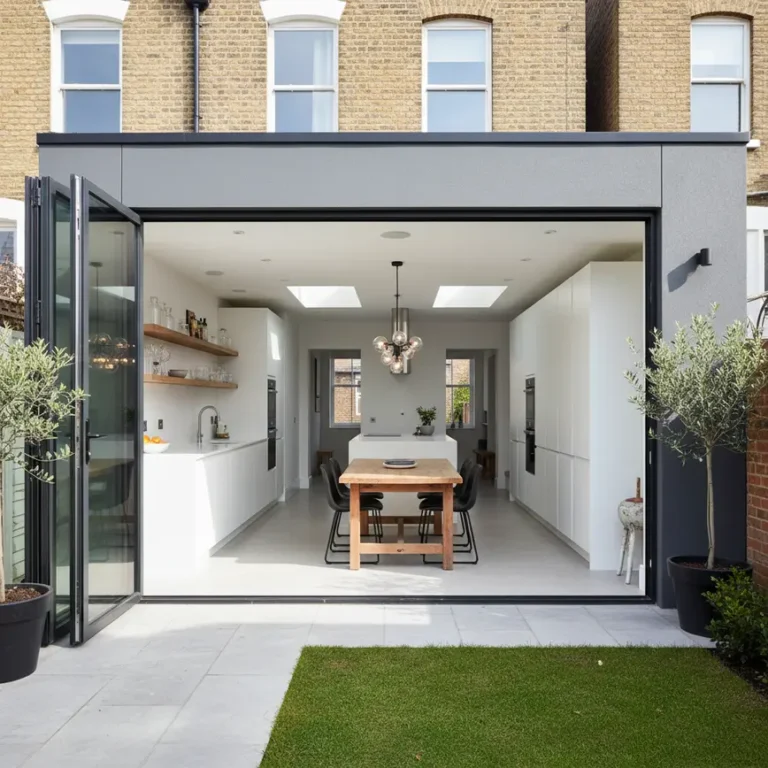
Permitted Development vs Planning Permission: A London Homeowner’s Guide

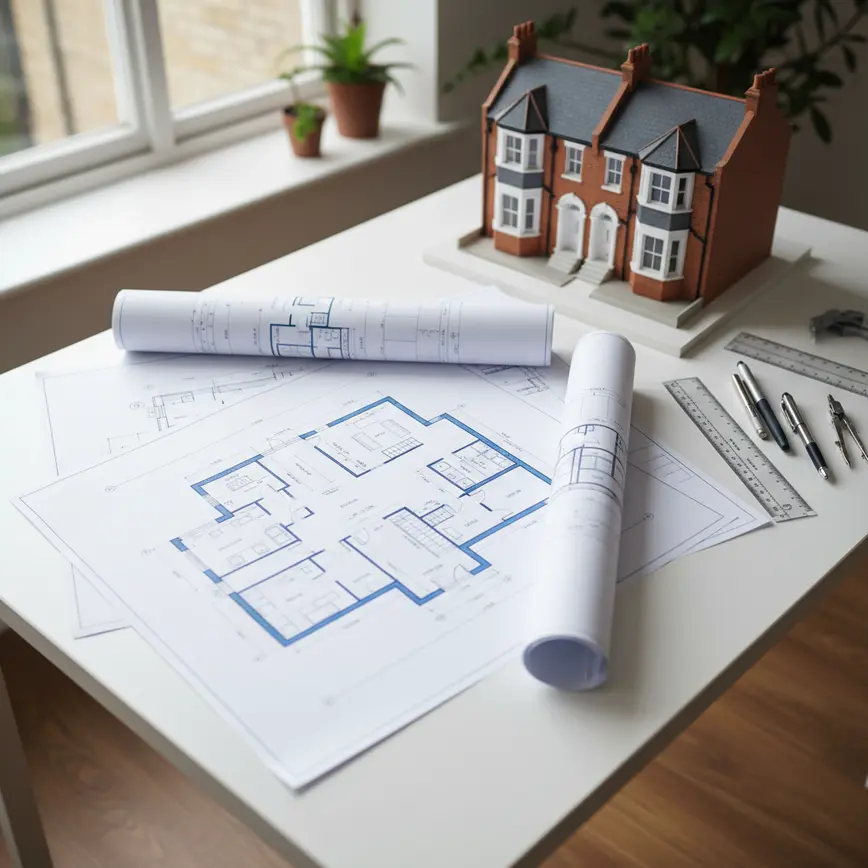
🔑 Key Takeaway
The core difference in permitted development vs planning permission is that Permitted Development Rights are a pre-granted allowance for minor extensions under national rules, while Planning Permission is a formal application you must submit to your local council for more significant or complex projects.
- Permitted Development: Often faster, cheaper, and well-suited for straightforward extensions, but has strict size and design limitations.
- Planning Permission: More flexible for larger, more ambitious designs but involves a longer, more expensive, and less certain application process.
- London Nuances: Rules can be stricter in London due to Conservation Areas, Article 4 Directions, and borough-specific policies.
- Key Step: Always verify your project’s requirements with your local council or a building professional before starting work.
Read on for a complete guide to navigating the right path for your London home extension.
For London homeowners, understanding the distinction between permitted development vs planning permission is the most critical first step in any extension project. Choosing the wrong path can lead to costly delays or even legal orders to demolish your new structure. This guide demystifies the complex regulations, helping you identify the correct route for your extension, save time and money, and proceed with confidence. We will compare the two processes, explain the specific rules for London, and clarify the difference between planning rules and building regulations.
With over 30 years of experience navigating these exact regulations across South London, from Croydon to Bromley, J&D Building has guided hundreds of homeowners through this process. This article leverages that hands-on experience to provide practical insights into permitted development rights London and the formal planning permission rules London, ensuring you have the expert knowledge needed for a successful project
ℹ️ Transparency
This article explores UK planning regulations based on official government guidance and decades of practical experience. Our goal is to inform you accurately to help you make the best decision for your home.
At a Glance: Key Differences
To simplify the core choice between permitted development vs planning permission, this table breaks down the key factors for a typical London house extension. Use this as a quick reference to understand the fundamental trade-offs in cost, time, and project scope.
| Factor | Permitted Development | Planning Permission |
|---|---|---|
| Cost | Lower (often just LDC fee) | Higher (Application fee + professional fees) |
| Timeline | Faster (4-8 weeks for LDC/Prior Approval) | Slower (8+ weeks for a decision) |
| Certainty | High (if rules are met) | Lower (Decision can be subjective) |
| Scope | Limited by national rules (size, height, materials) | More flexible and ambitious designs possible |
| Best for | Standard extensions, speed, and budget-focus | Large, complex, or unique projects; properties with restrictions |
What are Permitted Development Rights in London?
Permitted Development (PD) Rights are a national grant of planning permission which allow certain building works and changes of use to be carried out without having to make a formal planning application. According to official UK government guidance, these rights are defined to cover common, smaller-scale home improvements that stay within specified limits [1]. The key benefit is avoiding the time and expense of a full application, making them a popular route for projects like single-storey rear extensions that meet the permitted development extension size limits.
Common Extension Projects Under Permitted Development
Several common projects may fall under PD rights, though specific limitations apply:
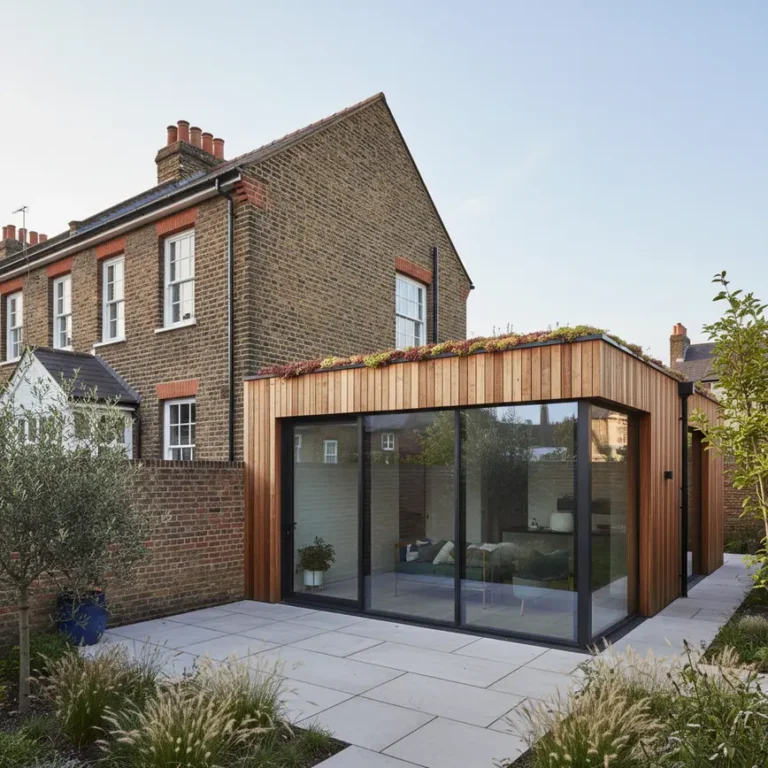
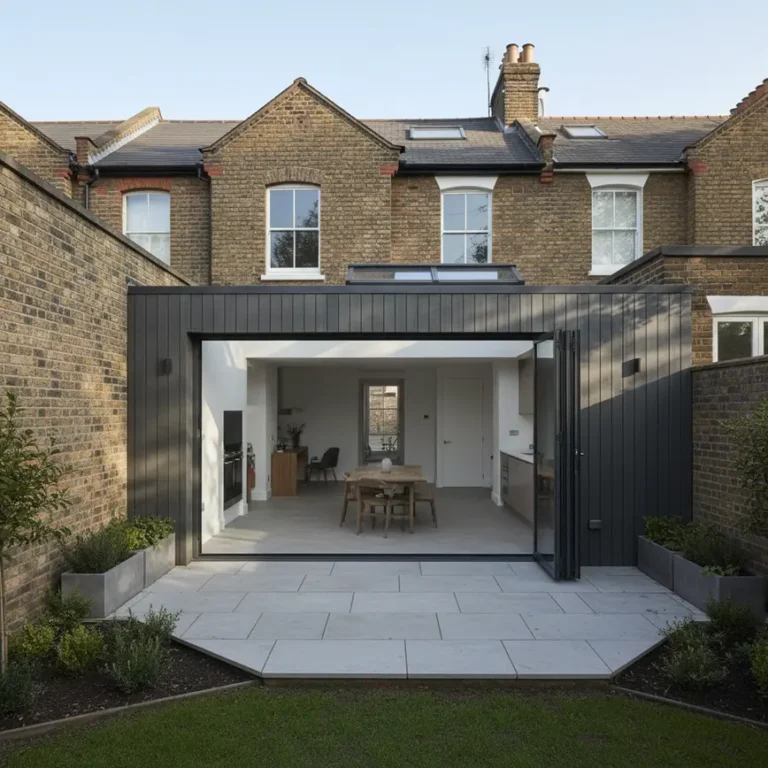
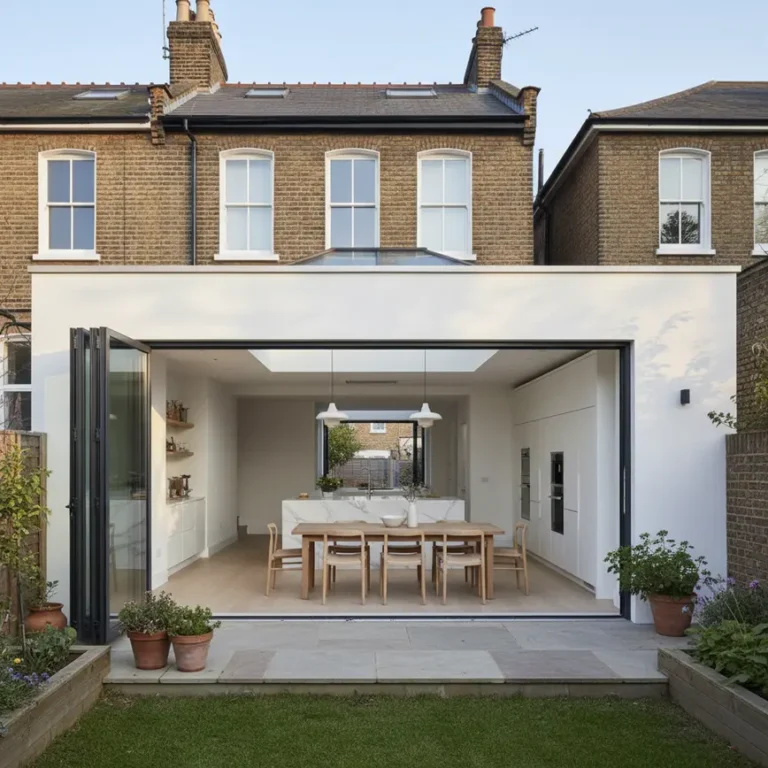
- Single-storey rear extensions: Can extend up to 6m for terraced or semi-detached houses and 8m for detached houses, although these larger extensions are subject to the Prior Approval process.
- Two-storey rear extensions: These are subject to stricter limits and typically cannot extend more than 3m from the original rear wall.
- Side extensions: These must be single-storey, with a maximum height of 4m and a width no more than half that of the original house.
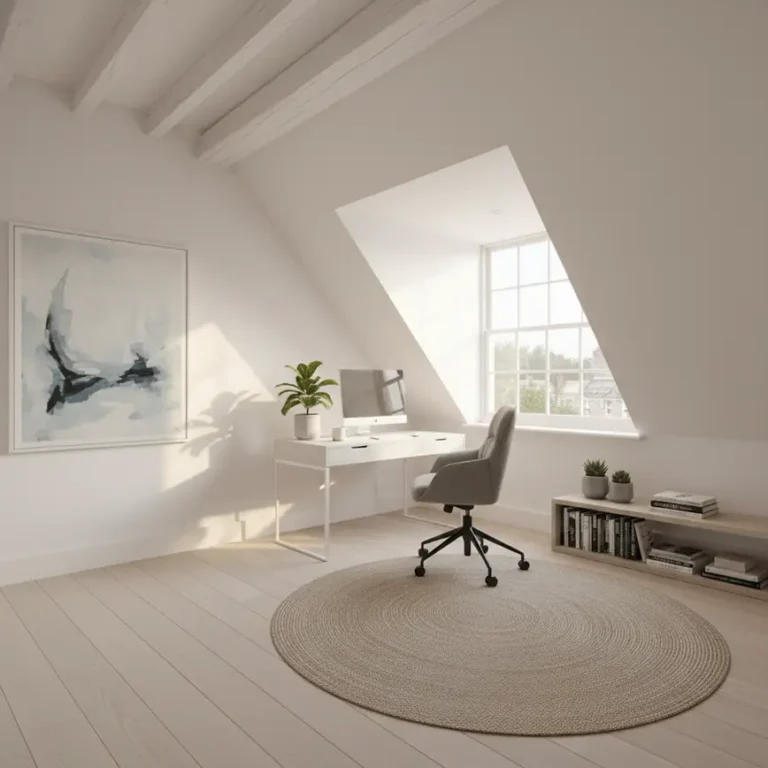
- Loft conversions: The general rules for loft conversions often fall under PD, provided they do not exceed certain volume limits (40 cubic metres for terraced houses) or alter the roof structure at the front of the property.
It’s important to note that the rules for extensions on designated land are much more restrictive, and permitted development for terraced houses London often has specific considerations.
When You Still Need ‘Prior Approval’
Even under Permitted Development, some larger extension projects require you to seek ‘Prior Approval’ from your local council before starting. This process, associated with the prior approval for extension scheme, allows the council to assess the potential impact of the proposed work on neighbouring properties. It is a mandatory step for single-storey rear extensions that fall between 3-6 metres for terraced or semi-detached homes, or between 4-8 metres for detached homes. You must notify the council of your plans, and they will then consult your neighbours. If no valid planning objections are raised and the project meets all other PD criteria, approval is typically granted.
When is Full Planning Permission Required?
Full Planning Permission is the formal consent you must obtain from your local authority for any development that does not fall under Permitted Development Rights. As stated in GOV.UK guidance on making an application, this formal process is required for work that falls outside of PD rights [2]. This typically applies to larger or more complex projects, such as extensions that exceed the size limits, properties in designated areas like Conservation Areas, or any extensions to flats and maisonettes, which usually have no PD rights. The planning permission rules London are designed to give the council control over more substantial developments.
The Planning Permission Application Process
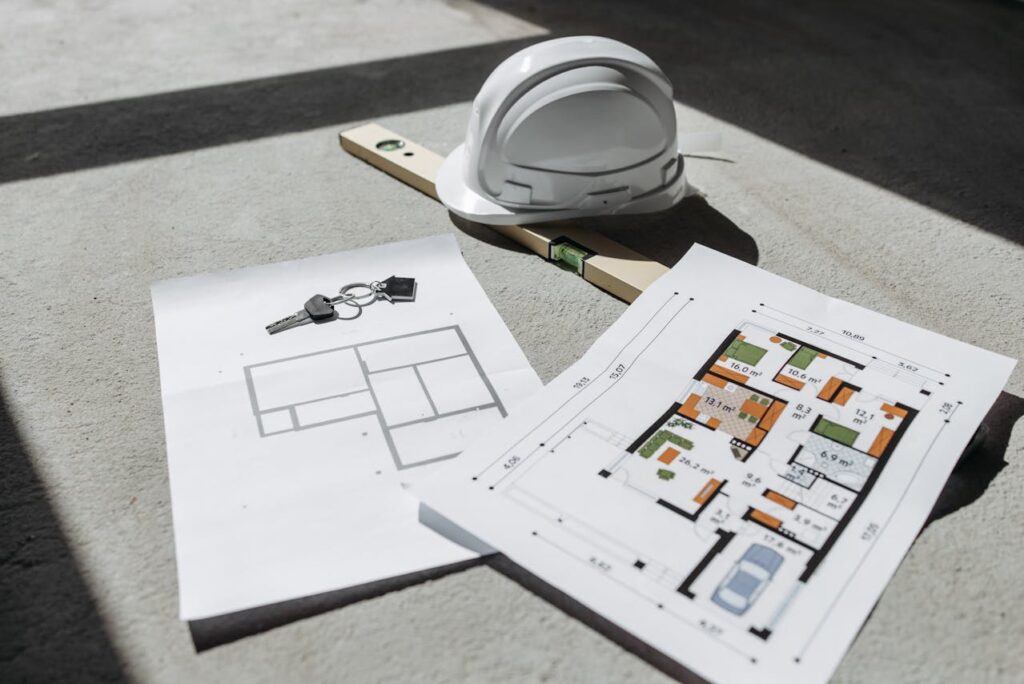
Applications for planning permission are typically submitted online via the UK’s Planning Portal. To apply for planning permission for an extension, you will need to provide a set of key documents. The documents needed for a planning application usually include detailed architectural drawings, existing and proposed site plans, a Design and Access Statement explaining your project’s rationale, and the correct application fee. The cost of planning permission application is a statutory fee set by the government. Once submitted, the local authority has a statutory timeline of approximately 8 weeks to issue a decision on most minor household applications.
Why Your Application Might Be Refused
Planning permission is not guaranteed, and refusal rates can be higher in some London boroughs. A 2025 analysis by Planning Resource found that London boroughs accounted for seven of the ten councils in England with the lowest application approval rates [3]. Common reasons for refusal include:
- Overlooking or causing a significant loss of privacy for neighbours.
- A negative impact on the character of the area or street scene.
- A design that is out of keeping with the style of the existing property.
- Insufficient provision for parking or amenity space.
- Conflict with the local council’s specific development plan or policies.
Understanding what happens if planning permission is refused is important; you can often appeal the decision or submit an amended application that addresses the council’s concerns.
The “London Factor”: Special Rules for the Capital
Navigating planning in London can be more complex than in other parts of the UK due to a dense urban environment, a high proportion of historic housing stock, and significant London borough planning differences. In our 30 years working in South London, we’ve seen how planning policies in Croydon can differ significantly from those in Bromley or Lambeth, especially regarding design, materials, and interpretation of national guidelines.
Navigating Conservation Areas and Listed Buildings
If your property is in a Conservation Area or is a Listed Building, your Permitted Development rights are likely severely restricted or removed entirely. Conservation Areas are designated to protect the special architectural or historic character of a place. According to guidance from Historic England, any development in these areas must “preserve or enhance” its character, which is why even minor external alterations often require formal consent [8]. This means you will almost certainly need full planning permission in a London conservation area for an extension, and there may be strict conservation area building restrictions on design and materials.
Understanding Article 4 Directions in Your Borough
An Article 4 direction explained simply is a tool used by local councils to remove specific Permitted Development rights in a defined area. Councils use these directions, which are implemented through a legal instrument outlined in UK legislation, to protect the character of a place, often within Conservation Areas or across streets with a uniform architectural style [4]. The impact is that you would need to apply for full planning permission for work that might otherwise be allowed under PD, such as building a small porch or converting a front garden into a driveway. It is essential to check your local council’s website to see if an Article 4 direction applies to your property.
Don’t Forget: Building Regulations vs Planning
A common point of confusion is the difference between planning permission and Building Regulations approval; they are two separate processes, and you will almost certainly need both for an extension. The Planning Portal, the UK’s official resource, clarifies this distinction [5]. Planning Permission relates to the principle of the development—its appearance, size, and impact on the surrounding environment and neighbours. It is about whether you are allowed to build it. Building Regulations, on the other hand, govern the technical and structural aspects of the construction to ensure it is safe, healthy, and energy-efficient. They cover details like foundations, insulation, fire safety, and ventilation. Think of it this way: Planning Permission decides if you can build the extension, while Building Regulations decide how the extension must be built. You will need building control approval for extension work regardless of which planning route you take.
FAQ – Your Permitted Development & Planning Questions
Do I need planning permission for a rear extension in London?
You may not need planning permission for a rear extension in London if it falls under Permitted Development rights. For a terraced or semi-detached house, this typically allows a single-storey extension up to 6 metres, provided it meets other criteria (e.g., height limits). However, rights are often restricted in Conservation Areas or by Article 4 directions, so it is crucial to check with your local London borough council first.
Can my neighbours stop my permitted development extension?
Neighbours cannot stop a permitted development extension, but they can raise objections that trigger a review by the council. For larger PD extensions (over 3m for a terraced house), you must use the Prior Approval scheme, where the council notifies your neighbours. If they raise valid planning-related concerns (e.g., loss of light), the council may refuse the project. For smaller extensions that don’t require Prior Approval, there is no formal objection process.
How much does a planning application cost in 2025?
The official fee for a householder planning application in England for an extension is £528 as of April 2025. This fee is paid directly to your local council via the Planning Portal when you submit your application. According to official government guidance, this fee is for the application itself [6]. Be aware that this does not include other costs such as architect’s fees for drawings or fees for other specialist reports that may be required.
What is a Lawful Development Certificate and do I need one?
A Lawful Development Certificate (LDC) is an official legal document from your council confirming that your extension project did not require planning permission because it fell under Permitted Development. While not mandatory, it is highly recommended. As explained in government guidance, an LDC provides proof of compliance, which can be crucial when you come to sell your property, protecting you from potential future enforcement action [7].
Limitations, Alternatives, and Professional Guidance
Research Limitations
It is important to acknowledge that planning policy is complex and subject to change. This article provides general guidance based on national rules, but local interpretations by individual London boroughs can vary significantly. Online resources are a valuable starting point, but they cannot replace a formal determination by a local planning officer. The ultimate decision for any application rests with the local authority, and individual circumstances can affect the outcome.
Alternative Approaches
If your proposed project is borderline, consider scaling it back slightly to fit comfortably within Permitted Development limits to avoid the uncertainty of a planning application. For more complex projects, another effective approach is to use the council’s pre-application advice service. While this service has a fee, it can provide valuable early feedback from a planning officer, potentially highlighting issues and saving you significant time and money later in the process.
Professional Consultation
We recommend seeking professional help from an architect or experienced builder before committing to a final design. These professionals can identify potential planning issues early, advise on local council preferences, and prepare high-quality drawings that are more likely to be understood and approved. An expert can often find creative solutions to meet both the stringent planning requirements and your personal needs for the new space.
Conclusion
The decision between permitted development vs planning permission hinges on a trade-off between the speed and certainty of PD rights and the design flexibility of a full planning application. For London homeowners, local factors like Conservation Areas and Article 4 Directions are often the deciding factor, adding a layer of complexity not always present elsewhere. The right path is ultimately unique to each property, project, and the homeowner’s specific goals.
With over 30 years of experience managing both Permitted Development and full Planning Permission applications across South London, we can help you make the right choice. Our expertise ensures your project complies with all local regulations, maximising your chances of a smooth and successful build. For expert guidance on your London house extension, Get Your Free Quote Today.
References
- GOV.UK. Permitted development rights for householders: technical guidance. https://www.gov.uk/government/publications/permitted-development-rights-for-householders-technical-guidance
- GOV.UK. Making an application. https://www.gov.uk/guidance/making-an-application
- Planning Resource. Councils with the highest and lowest application approval rates in 2024/25. https://www.planningresource.co.uk/article/1930157/councils-highest-lowest-application-approval-rates-2024-25
- Legislation.gov.uk. The Town and Country Planning (General Permitted Development) (England) Order 2015, Schedule 3. https://www.legislation.gov.uk/uksi/2015/596/schedule/3
- Planning Portal. Difference between building regulations and planning permission. https://www.planningportal.co.uk/applications/building-control-applications/building-control/building-regulations/difference-between-building-regulations-and-planning-permission
- GOV.UK. Fees for planning applications. https://www.gov.uk/guidance/fees-for-planning-applications
- GOV.UK. Lawful Development Certificates. https://www.gov.uk/guidance/lawful-development-certificates
- Historic England. Advice on Conservation Areas. https://historicengland.org.uk/advice/planning/conservation-areas/