The Ultimate Guide to a House Extension London in 2025

🔑 Key Takeaway
A house extension London typically involves three key stages: design and planning (0-3 months), the build (3-6 months), and finishing (1 month), with costs largely depending on size, materials, and adherence to local planning rules.
- Planning: Many extensions fall under ‘Permitted Development’, but rules in London boroughs can be strict; always verify with your local council.
- Costs: Expect to budget between £1,800 – £3,000+ per square metre, plus professional fees and VAT.
- Value: A well-executed extension can add up to 24% to your property’s value, making it a significant investment.
Read on for our complete 2025 guide to navigating your project successfully.
In a city where space is the ultimate luxury, expanding your home is one of the most effective ways to enhance your living environment. Yet, for many homeowners, the thought of planning a house extension London can seem daunting. Navigating the maze of planning permission London, setting a realistic budget, and finding the right team can feel overwhelming. A successful extension, however, does more than just add square footage; it can transform your quality of life and significantly increase your property’s value. This guide is designed to demystify the process, providing a clear roadmap from initial concept to final completion.
This comprehensive guide is built on the expertise of Jozeph, the owner of J&D Building, who brings over 30+ years of direct experience in renovating and extending homes across South London and the surrounding areas. We will walk you through the critical details of UK building regulations, provide a transparent breakdown of house extension costs UK for 2025, and offer design inspiration for your project. Our goal is to equip you with the knowledge to proceed with confidence, ensuring your home’s transformation is a resounding success.
ℹ️ Transparency: This guide is based on extensive industry experience and official UK building regulations. Our goal is to inform you accurately to help you make the best decision for your home. We offer services discussed in this article.
Understanding Planning Permission & Permitted Development in London
What are Permitted Development Rights?
Permitted Development (PD) rights are a national grant of planning permission established by parliament, which allow for certain types of building work and alterations to be carried out on houses without the need for a full planning application. These rights are designed to streamline smaller, less contentious projects. However, they come with a strict set of limitations and conditions. For example, the official GOV.UK technical guidance specifies limits on extension depth—such as 3 metres for a terraced house and 4 metres for a detached house—and restrictions on height, ensuring the extension is not higher than the original roof. Understanding permitted development rights is the first step in determining how far can I extend without planning permission.
When is Planning Permission Required for a house extension London?
Planning permission is required for an extension whenever the proposed work falls outside the scope of Permitted Development rights. This can also occur in areas where PD rights have been restricted or removed by the local authority. It is essential to understand the triggers that necessitate a full planning application.
Common reasons you may need to apply for planning permission London include:
- Proposing a rear extension that projects more than 3 or 4 metres from the original rear wall (depending on property type).
- Planning an extension that is higher than the highest part of the existing roof.
- Living in a flat, maisonette, or listed building, as these property types generally have no Permitted Development rights.
- Residing in a designated area, such as a Conservation Area, where PD rights are often restricted. As a planning guidance document from August 2023 by a local council notes, extensions in these areas must be “subordinate and positively respond to the host building.” [5]
Navigating London Borough Councils
While permitted development rules London are set at a national level, each London borough has the authority to interpret these rules and apply additional local policies. Many councils have introduced ‘Article 4 Directions’, which remove specific Permitted Development rights in a defined area, such as a conservation area, to protect its character. This means that a project that would be acceptable in one borough might require a full planning application in another. Therefore, it is crucial to check the planning portal of your specific local council before committing to any designs. At J&D Building, we have extensive experience navigating the unique requirements of South London councils, including Lambeth council planning permission as well as those for Croydon and Bromley.
Budgeting Your House Extension London: A 2025 Cost Guide
Average Cost Per Square Metre in London
In 2025, the typical cost for a house extension in London generally ranges from £1,800 to over £3,000 per square metre (£/m²), excluding VAT and professional fees. This average cost of extension per square metre is influenced by several key factors. The quality of the finish plays a significant role, with high-end kitchens, bathrooms, and bespoke joinery increasing the cost. Furthermore, complex structural work, difficult site access, and the specific location within London can all push the price towards the higher end of this range. A 2023 analysis from the HomeOwners Alliance (HOA), a reputable UK advisory body, supports this baseline, confirming that house extension costs UK vary widely based on these project-specific details.
Example Costs: Single Storey vs. Two Storey Extension
To help you visualise your budget, the table below provides estimated total cost ranges for common extension sizes. These figures are for the build only and do not include professional fees or VAT. The final kitchen extension cost London or cost of two storey extension UK will depend on your specific design and material choices.
Table 1: Estimated Extension Costs in London (2025)
| Extension Size | Avg. Single-Storey Cost (Build Only) | Avg. Two-Storey Cost (Build Only) |
|---|---|---|
| 20m² | £40,000 – £65,000+ | £70,000 – £110,000+ |
| 30m² | £55,000 – £90,000+ | £95,000 – £150,000+ |
| 50m² | £90,000 – £150,000+ | £150,000 – £240,000+ |
Disclaimer: These costs are estimates for guidance purposes only. Individual project costs may vary.
Hidden Costs to Factor In (Architects, Surveys, VAT)
One of the most important aspects of budgeting is accounting for the hidden costs of building an extension. The construction price is only part of the total investment. To ensure you have a comprehensive budget, consider the following professional fees and charges:
- Architect Fees: Typically 5-12% of the construction cost for developing designs, creating technical drawings, and managing the planning application.
- Structural Engineer Fees: Around £500 – £2,000, required for calculations to ensure the structural integrity of the new build.
- Planning Application Fees: A standard fee for a homeowner application in England is currently £206.
- Party Wall Agreements: If you are building on or near a boundary with a neighbour, you may need a surveyor. This can cost between £1,000 – £2,000 per neighbour.
- VAT: Construction work is subject to 20% VAT, which adds a significant amount to the total project cost.
Choosing Your Extension Type: Ideas & Inspiration
The Side Return Extension: Perfect for Victorian Terraces
A side return extension is one of the most popular types of house extensions in London, particularly for the classic Victorian and Edwardian terraced houses that define many neighbourhoods. This extension fills in the narrow alleyway that runs alongside the rear part of the house, squaring off the back of the property. While it may not add a huge amount of square footage, its main benefit is transforming a typically dark, narrow kitchen into a much wider, brighter, and more functional space. This is an effective way to improve your home’s layout without sacrificing a significant portion of your garden, making it a focus of many victorian terrace extension ideas. For those with limited space, even small side return extension ideas can have a dramatic impact.
The Rear Extension: Maximising Space and Light
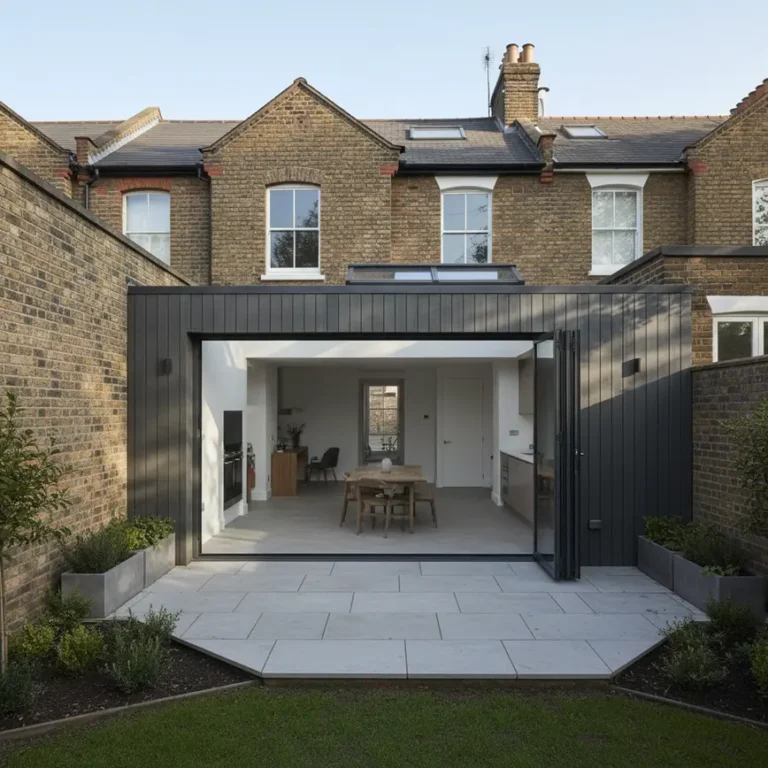
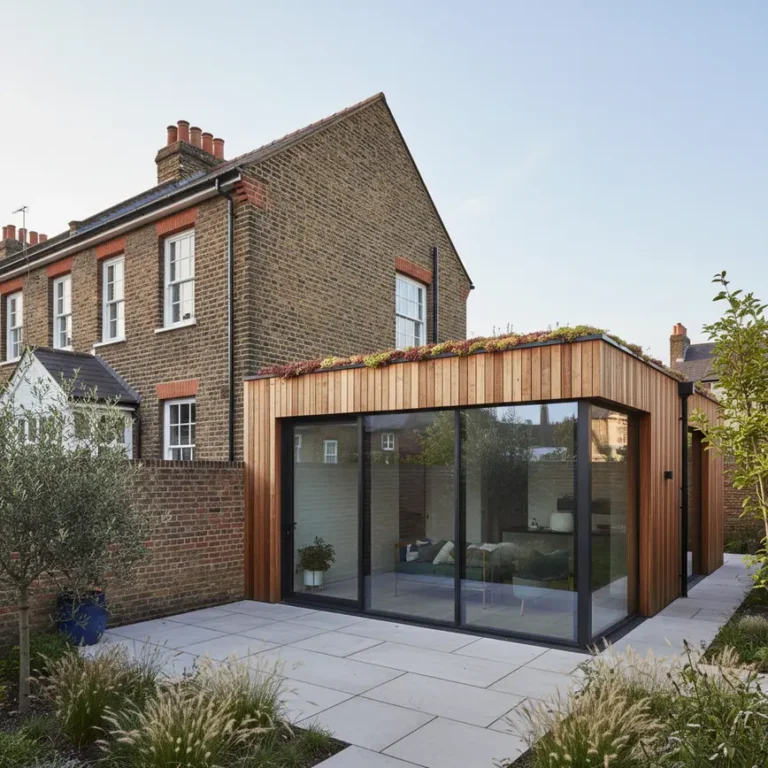
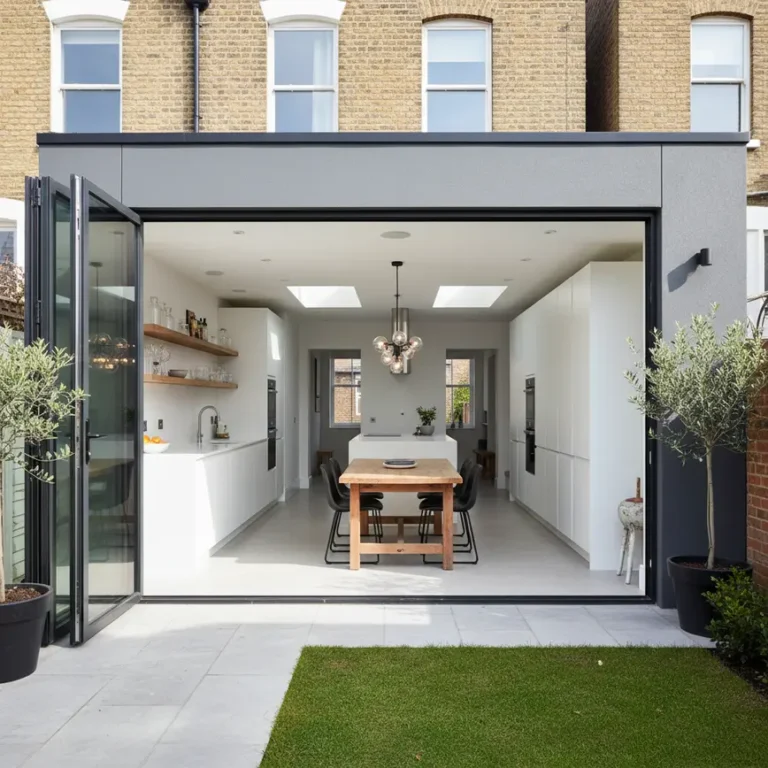
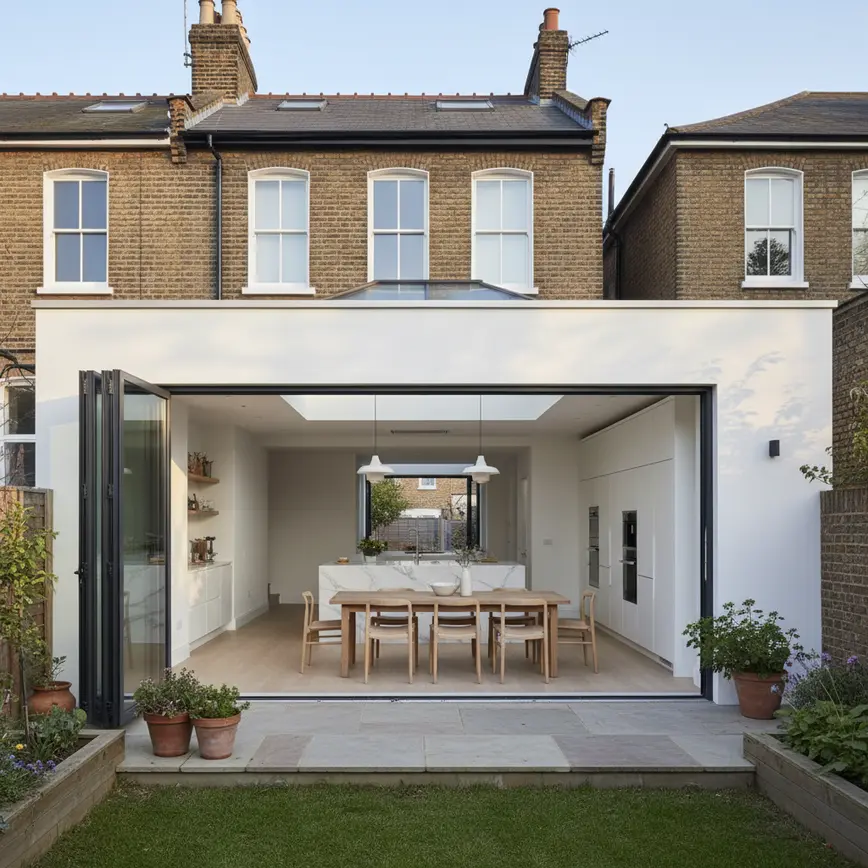
A rear extension projects directly from the back of your property into the garden, offering a versatile way to add a substantial amount of new living space. This type of extension is well-suited for creating a large, open-plan kitchen and dining area (https://jdbuilding.london/kitchen-renovation-london), which is a highly sought-after feature in modern homes. The design possibilities are vast, with many homeowners opting for large glass elements like skylights and bi-fold doors to flood the new space with natural light and create a seamless connection to the outdoors. Whether you are looking for modern kitchen extension ideas or a more traditional living room, rear extension ideas provide the flexibility to achieve your vision.
The Two Storey Extension: The Ultimate Upgrade
For homeowners seeking the maximum possible increase in living space, a two storey extension (or double-storey) is a compelling option. This approach typically involves extending at the rear or side of the property across both the ground and first floors. The benefits are substantial: you could add a large kitchen-diner downstairs while simultaneously creating a new master bedroom with an en-suite or an extra children’s bedroom upstairs. While the cost is higher and the planning process can be more complex, a two-storey extension often provides better value per square metre than a single-storey one and can fundamentally change how your home functions for the better.
The Extension Process: A Step-by-Step Timeline
Stage 1: Design & Planning (0-3 Months)
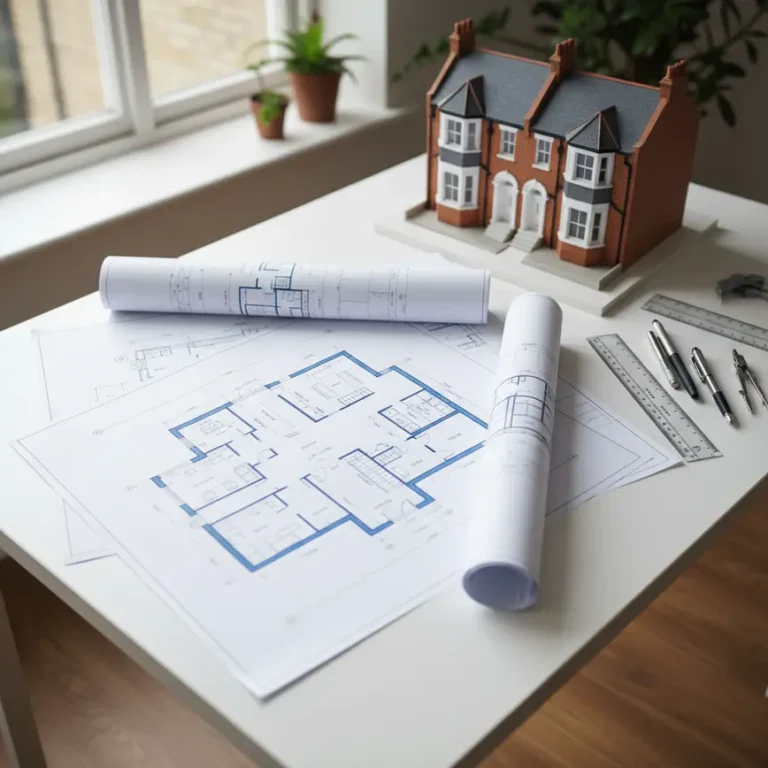
This initial stage lays the foundation for the entire project and is a critical part of the house extension process step by step. It begins with an initial consultation with your chosen builder or architect to discuss your vision and budget. The next steps involve hiring an architect to develop detailed designs and technical drawings. If your project requires planning permission, your architect will submit the application on your behalf. During this time, you must also address any legal obligations, such as serving notice to your neighbours if a Party Wall Agreement is needed. Learning how to find an architect in London and understanding what is a party wall agreement are key to a smooth start.
Stage 2: The Build (3-6 Months)
Once all permissions are in place, the construction phase can begin. This stage starts with site preparation, including demolition and clearing the area. This is followed by digging foundations and completing the necessary structural work, which may involve a structural engineer for extension oversight. The main structure, including walls and the roof, is then erected to make the extension watertight. The first-fix stage follows, where essential services like plumbing and electrical wiring are installed within the new structure before the walls are plastered. According to a consumer guide from the Royal Institution of Chartered Surveyors (RICS), selecting a contractor and carefully monitoring these key build stages are vital for project success. Finding a reliable builder in London is paramount to this phase.
Stage 3: Finishing & Sign-off (1 Month)
The final stage is where the empty shell transforms into a finished living space. This involves plastering the interior walls, followed by the second-fix for electrics (light fittings, sockets) and plumbing (radiators, taps). If the extension includes a kitchen or bathroom, this is when the units, appliances, and sanitaryware are fitted. Finally, the space is decorated with flooring and paint. Throughout this process, a building control inspector will visit the site at key milestones to ensure the work complies with UK building regulations. Upon successful completion, you will receive a final completion certificate, which is an important document for when you eventually sell your property. This stage helps answer the common question of how long to build an extension UK.
FAQ Section: Your House Extension London Questions Answered
What is the 45 degree rule for extensions?
The 45-degree rule is a guideline used by many local planning authorities to determine if an extension will block an unacceptable amount of light from a neighbour’s window. It works by drawing a line at a 45-degree angle from the centre of the nearest main window on the neighbouring property. If your proposed extension crosses this line, it may be considered overbearing and could be rejected. This is a common consideration in densely populated areas of London. Always check your local council’s specific design guides.
Do I need planning permission for an extension?
You may not need planning permission if your extension falls under ‘Permitted Development’ rights. For a typical house, this allows for single-storey rear extensions up to a certain size and other works. However, you will almost certainly need permission if you live in a flat, maisonette, or a conservation area, or if your project exceeds the strict size limits. It is crucial to verify the specific rules with your London borough council before any work begins.
How much value does an extension add to a London property?
A well-designed house extension can add significant value, often between 10% and 24% to a London property’s value. The final amount depends on the scale and quality of the extension, the type of room added (e.g., a bedroom and bathroom adds the most), and the local property market. A 2024 report from Nationwide Building Society indicated that an extension adding a double bedroom and bathroom could increase a property’s value by as much as 24%. While the return on investment is generally strong, it’s important to balance building costs against the potential value increase in your specific area.
Can my neighbour object to my extension?
Yes, your neighbour has the right to object to your extension if it requires a planning application. The local council will invite them to comment, and they will consider objections based on valid planning grounds like loss of light, privacy, or the design being out of character. For projects under Permitted Development, neighbours have fewer grounds to object, but they can still raise concerns through the Neighbour Consultation Scheme for larger extensions. Maintaining good communication is always recommended.
What is a Party Wall Agreement and do I need one?
A Party Wall Agreement is a legal document required under the Party Wall etc. Act 1996 when you are doing work on or near a shared wall (a ‘party wall’) with a neighbour. According to the official GOV.UK explanatory booklet, which has been in force since 1997, you will need one if your extension involves building on the boundary line, excavating near your neighbour’s foundations, or cutting into the shared wall. You must serve a formal ‘Party Wall Notice’ to your neighbour before work starts to begin the process.
Limitations, Alternatives, and Professional Guidance
Research Limitations & Considerations
It is important to recognise that the cost estimates and timelines provided in this guide are indicative and can change based on fluctuating material prices, labour costs, and the specific complexities of your project. Additionally, local and national planning policies may be updated, so verifying current regulations is essential. The potential value added to a property is also an estimate and is not guaranteed, as it depends heavily on wider property market conditions at the time of valuation.
Alternative Approaches
While an extension is an excellent solution for many, it is not the only way to gain more usable space. For some homeowners, alternatives such as a loft conversion or an internal reconfiguration might be a more suitable approach. A loft conversion can create an extra bedroom or office without altering the property’s footprint, while reconfiguring the existing layout can often unlock underutilised space. The best choice depends on your property type, budget, and specific goals.
Professional Consultation
We strongly recommend consulting with qualified professionals, including both an architect and an experienced builder, before committing to any significant building work. An architect can help you realise your vision with compliant and creative designs, while a reputable builder can provide accurate, detailed quotes and navigate the practical challenges of the build. This professional guidance is invaluable for ensuring your project is safe, compliant, high-quality, and ultimately meets your expectations.
Conclusion
To summarise, a successful house extension London hinges on a clear understanding of local planning rules, the establishment of a realistic and comprehensive budget, and adherence to a structured, step-by-step process. By carefully navigating these key areas, you can effectively manage your project from concept to completion. The primary benefit remains clear: gaining invaluable living space tailored to your needs while potentially enhancing your property’s long-term value. However, it is important to remember that every project is unique, and thorough preparation is key.
As experienced builders in Croydon and across South London, J&D Building is here to help you navigate the complexities of extending your home. With over 30 years of hands-on experience and a commitment to direct owner communication, we provide the expertise and reliability needed to bring your vision to life. If you’re ready to explore the potential of your home, contact us for your free, no-obligation quote today.
References
- GOV.UK. (n.d.). Permitted development rights for householders: technical guidance. Retrieved from https://www.gov.uk/government/publications/permitted-development-rights-for-householders-technical-guidance
- HomeOwners Alliance. (n.d.). House Extension Cost: Breakdown By Size & Type. Retrieved from https://hoa.org.uk/advice/guides-for-homeowners/for-owners/house-extension-costs/
- GOV.UK. (n.d.). The Party Wall etc. Act 1996: explanatory booklet. Retrieved from https://www.gov.uk/government/publications/preventing-and-resolving-disputes-in-relation-to-party-walls/the-party-wall-etc-act-1996-explanatory-booklet
- The Independent. (2024). The home renovations that can add the most value to your property. Retrieved from https://www.the-independent.com/news/uk/home-news/home-renovation-house-price-value-b2845462.html
- Lambeth Council. (2023, August). Building Alterations, Extensions and Retrofit. Retrieved from https://www.lambeth.gov.uk/sites/default/files/2023-08/Part_4__BuildingAlterations,Extensions.pdf
- Royal Institution of Chartered Surveyors (RICS). (n.d.). Home extensions and improvements. Retrieved from https://www.rics.org/consumer-guides/home-extensions-improvements