Loft Conversion London: The Ultimate 2025 Guide for Homeowners

🔑 Key Takeaway
A loft conversion london is a construction project that transforms your unused attic space into a functional living area, such as a bedroom, office, or bathroom, potentially adding significant value to your property. This type of project can increase your home’s value by up to 25% and often doesn’t require planning permission, falling under ‘Permitted Development’. The most common types are Dormer, Mansard, Hip-to-Gable, and Velux (rooflight), with costs varying by type, size, and complexity. Read on for our complete 2025 guide to costs, regulations, and types.
A loft conversion london is one of the most effective ways to add significant living space and value to your home without the cost and hassle of moving. For growing families or professionals needing a home office, utilising the empty space above your head is a smart investment. This guide provides expert insights from J&D Building’s 30+ years of experience as loft conversion specialists, covering everything from costs and types to regulations for your dormer loft conversion.
We’ll break down the process, explain the differences between key loft types, and clarify the often-confusing rules around planning permission and building regulations. By the end of this guide, you’ll understand the potential return on investment and be equipped with the right questions to ask your builder. Let’s begin by exploring the costs involved.
ℹ️ Transparency
This article explores loft conversions based on official UK regulations and industry data. Some links may lead to our services. All information is based on verified sources and reviewed by our in-house expert, Jozeph. Our goal is to inform you accurately.
Understanding Loft Conversion Costs in London
The average cost of a loft conversion london can range from £27,500 for a simple Velux conversion to over £75,000 for a more complex Mansard or Hip-to-Gable project. This price is influenced by the size of your property, the type of conversion, the complexity of structural work, and the quality of interior finishes. According to data from the HomeOwners Alliance, a typical Velux loft conversion costs around £27,500, providing a baseline for UK homeowners when considering their loft conversion costs uk. To give you a clearer picture, let’s break down the average cost of loft conversion by type.
Average Cost by Loft Type (Dormer, Mansard, Velux)
The table below outlines the estimated costs and benefits for the main conversion types. Data from the HomeOwners Alliance suggests that costs can range from £1,250/m² to £2,500/m², depending on the project’s complexity. For those considering the terraced house loft conversion cost london, a dormer often presents a well-balanced option, adding substantial space for a moderate investment compared to a full mansard conversion.
| Loft Type | Estimated Cost Range | Typical Timeframe | Key Benefit |
|---|---|---|---|
| Velux/Rooflight | £27,500 – £40,000 | 6-8 weeks | Most affordable and least disruptive; includes cheap loft conversion ideas. |
| Dormer | £45,000 – £70,000 | 8-10 weeks | Adds significant headroom and floor space; very popular. |
| Hip-to-Gable | £55,000 – £75,000+ | 10-12 weeks | Maximises space in semi-detached or end-of-terrace homes. |
| Mansard | £60,000 – £80,000+ | 10-12 weeks | Creates the most additional space, often with a flat roof. |
Factors That Influence Your Final Quote
Several key factors will influence your final quote beyond the basic conversion type. The existing roof structure can play a role; for instance, modern trussed roofs may require more structural work than older, traditionally framed roofs. Extensive plumbing and electrical work, especially for adding a bathroom, will increase costs. The type of insulation, the number and style of windows (such as Velux rooflights or a Juliette balcony), and the overall level of finish—from flooring to fixtures—are also significant variables. For homeowners considering finance for loft conversion uk, it’s important to account for these details. London properties, particularly older ones, may also present unique structural challenges that a detailed quote should address.
How a Loft Conversion Adds Value to Your London Property
A loft conversion is often considered one of the best home improvements for return on investment (ROI). When asking are loft conversions worth it london, the financial data suggests a positive answer. A 2025 special report from Nationwide Building Society found that a loft conversion incorporating a large double bedroom and bathroom can increase a property’s value by as much as 25%. This significant uplift in value answers the key question of how much value does a loft conversion add, making it a financially sound investment for many homeowners. Results may vary individually based on market conditions.
Types of Loft Conversions for London Homes
The four main types of loft conversions are Dormer, Hip-to-Gable, Mansard, and Rooflight (or Velux), each suited to different property styles and budgets. The most effective choice for your home will depend on its existing roof shape, your desired outcome for the new space, and your overall budget. Whether you are planning a dormer loft conversion, a hip to gable loft conversion, or a mansard loft conversion, understanding the fundamentals of each is the first step. To see examples of these different styles, you can view our past projects. Let’s explore each type in more detail.
Dormer Conversions: The Most Popular Choice
A dormer conversion is a structural extension that projects vertically from the plane of a sloping roof, creating a box-shaped structure. This design is highly popular because it adds a great deal of usable floor space and, crucially, generous headroom. Dormer conversions are versatile and can be built in several styles, including the common flat-roof dormer or a more stylised pitched-roof dormer. For larger properties, an l shaped dormer loft conversion can create multiple rooms. This type often falls under permitted development, making it a straightforward choice for a victorian terrace loft conversion london.
Hip-to-Gable: Ideal for Semi-Detached Homes
A hip-to-gable conversion is designed for properties with a hipped roof, which is a roof that slopes downwards on all four sides. The process involves replacing one of the hipped sides with a vertical wall, known as a gable, extending it from the ridgeline outwards. This change transforms the previously small, sloped attic area into a much larger, more functional space with full headroom. Because it involves a significant structural alteration to the roof’s profile, it is particularly well-suited for semi-detached or end-of-terrace houses where there is a side to extend.
Mansard Conversions: Maximising Headroom
A mansard conversion is a major structural alteration that spans the entire plane of your property’s roof. This type of extension changes the roof’s angle to be almost vertical, typically at 72 degrees, and is often finished with a near-flat roof. The result is a significant increase in volume, maximising the available headroom and creating what feels like an additional storey to the house. Due to the substantial changes to the roof structure and shape, a mansard conversion very often requires full planning permission, but it offers the greatest potential for adding living space.
Rooflight / Velux Conversions: The Simplest Option
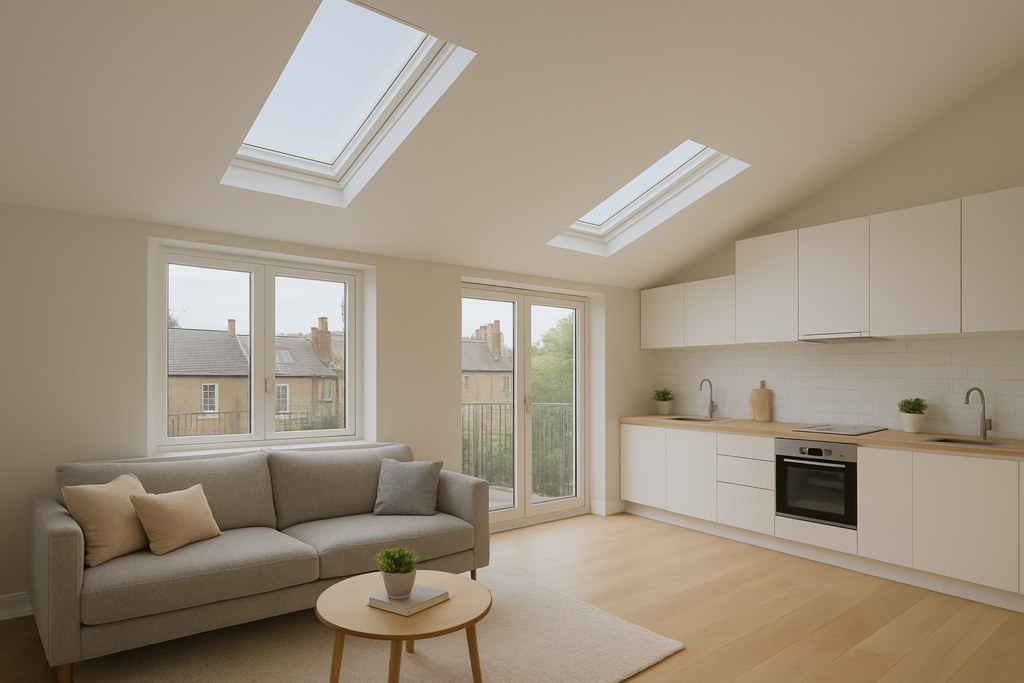
A rooflight or Velux conversion is the simplest and most cost-effective method for transforming an attic. This approach involves adding windows into the existing roof slope without altering its original structure or shape. Because it is the least disruptive option, it is almost always considered permitted development and can be completed relatively quickly. The main limitation is that this type of conversion does not add significant headroom or floor space, making it best suited for lofts that already have sufficient height. It is an excellent choice for creating a bright, airy room with some creative velux loft conversion ideas.
Navigating Planning Permission & Regulations
Most loft conversions do not require full planning permission as they are considered ‘Permitted Development’, but all conversions must comply with Building Regulations. It is crucial to understand the difference between these two controls. Planning permission, which governs loft conversion planning permission, relates to the appearance of the building and its impact on the local area. In contrast, loft conversion regulations uk cover the safety and structural integrity of the work. Official UK government guidance on the Planning Portal confirms that many loft conversions are considered permitted development, not requiring planning permission, as long as they adhere to specific limits and conditions.
Permitted Development vs. Full Planning Permission
Permitted Development rights allow homeowners to undertake certain types of work without needing to apply for planning permission. For loft conversions, these rights are subject to key criteria, including volume limits and restrictions on how far the extension can project. The official UK government’s technical guidance on ‘permitted development rights for householders’ outlines the specific volume limits for roof enlargements, which are typically 40 cubic metres for terraced houses and 50 cubic metres for detached and semi-detached houses. It is important to note that these permitted development loft conversion rules may be restricted in designated areas, such as conservation areas or National Parks.
Understanding Building Regulations
Regardless of whether planning permission is needed, all loft conversions require Building Regulations approval. This is a non-negotiable step to ensure the new space is safe, healthy, and energy-efficient. According to GOV.UK, building regulations approval is mandatory for all loft conversions to ensure they are structurally safe and habitable. Key areas of compliance for loft conversion building regulations uk are detailed in the Approved Documents, particularly parts A (Structure) and B (Fire Safety), and cover aspects like structural strength, fire safety and escape routes, stair access design, and insulation standards.
The Party Wall Act Explained
If your home is terraced or semi-detached, you share a wall with a neighbour. This shared wall is known as a party wall, and any work that might affect it is covered by specific legislation. The Party Wall etc. Act 1996 is official UK legislation that provides a framework for preventing and resolving disputes related to party walls. The act requires a building owner to serve a formal Party Wall Notice to any adjoining owners before work begins. A party wall agreement for loft conversion is then put in place, either by mutual consent or with the help of surveyors, to ensure the work is carried out without damaging the neighbouring property.
Our Loft Conversion Process: From Design to Completion
Our streamlined loft conversion process takes you from initial idea to a fully completed space in four clear stages. As a loft conversion design and build london specialist, we manage every step to ensure a smooth and transparent experience. Here is what you can expect.
Step 1: Initial Consultation & Free Quote
The process begins with an initial, no-obligation consultation at your property. A member of our experienced team will assess your loft space, discuss your ideas and requirements, and explain what is feasible based on your home’s structure and local regulations. We then provide a detailed, transparent quote outlining all anticipated costs.
Step 2: Architectural Design & Planning
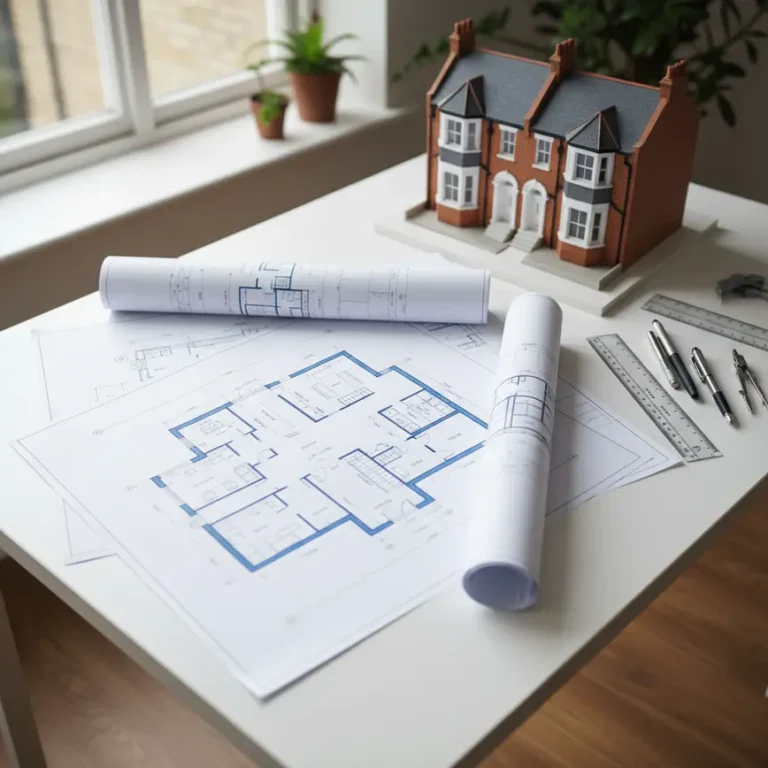
Once you are happy to proceed, we move to the design phase. Our team creates detailed architectural drawings and structural plans to bring your vision to life while ensuring full compliance with Building Regulations. We also handle any necessary applications on your behalf, whether for a Certificate of Lawfulness under Permitted Development or for full planning permission, keeping the loft conversion timeline uk efficient.
Step 3: The Build Phase
With all plans approved, the construction work begins. This phase starts with the erection of scaffolding, followed by the structural work to form the new space, including steel supports, flooring, and the dormer or other extension. Throughout the build, you will have direct communication with our owner, Jozeph, ensuring you are kept informed at every stage.
Step 4: Finishing & Handover
The final stage involves all the finishing touches that turn the structure into a beautiful living space. This includes first and second-fix electrics and plumbing, insulation, plastering, and decorating. Once complete, the project undergoes a final inspection to ensure every detail meets our high standards before we officially hand over your new, completed loft conversion.
Why Choose J&D Building for Your Loft Conversion South London
Choosing the right partner for your loft conversion south london is a critical decision. With over 30 years of experience, J&D Building has developed deep expertise in working with the unique housing stock across London, especially in Croydon and for loft conversion bromley projects. We understand the specific challenges and opportunities presented by Victorian terraces, 1930s semis, and modern detached homes in the area. Our key difference is our commitment to personal service; you communicate directly with the owner, Jozeph, from start to finish, not a salesperson or an anonymous project manager.
Our commitment to quality, transparency, and customer satisfaction is at the heart of everything we do. We believe in providing clear, detailed quotes with no hidden surprises and pass on our trade discounts for materials and fittings directly to you. This transparent approach builds trust and ensures you receive excellent value. Our long-standing presence and extensive portfolio of completed projects in South London demonstrate our reliability and dedication to exceptional craftsmanship. We pride ourselves on making the entire process as stress-free as possible for our clients.
FAQ – Your Loft Conversion Questions Answered
How much does a loft conversion cost in London?
The cost of a loft conversion in London typically ranges from £27,500 to over £75,000. A simple Velux or rooflight conversion is the most affordable, while more complex Mansard or Hip-to-Gable conversions are at the higher end. The final price depends on your property’s size, the project’s complexity, and your choice of finishes. It is always best to get a detailed quote from a specialist.
Do you need planning permission to convert a loft in the UK?
No, you do not normally need planning permission for a loft conversion in the UK. Most projects fall under ‘Permitted Development’ rights, provided they stay within specific limits (e.g., volume and height). However, you will always need Building Regulations approval to ensure the work is structurally safe. If your property is in a conservation area or is a listed building, you will likely need permission.
How long does a loft conversion take?
A typical loft conversion takes between 6 to 10 weeks to complete. A simple Velux conversion might be finished in 6-8 weeks, while a larger dormer or mansard conversion could take 8-10 weeks. This timeline can be affected by factors like the complexity of the design, weather conditions, and the delivery of materials. Your builder should provide a detailed project timeline upfront.
What is the 10 year rule for loft conversion?
The ’10 year rule’ generally refers to a planning enforcement loophole, not a standard building practice. It relates to the time limit for a local authority to take enforcement action against a development that was built without planning permission. This is a high-risk strategy and is not a substitute for obtaining the proper permissions and Building Regulations approval from the start. All work should be fully compliant from day one.
What is the cheapest way to convert lofts?
The cheapest way to convert a loft is a ‘rooflight’ or ‘Velux’ conversion. This method involves the least amount of structural alteration, as windows are simply added to the existing roofline. It minimises costs for labour and materials but also adds the least amount of extra headroom and floor space. This option is best suited for lofts that already have sufficient height.
Can any loft be converted?
No, not every loft can be converted easily or cost-effectively. The most critical factor is head height; a minimum of 2.2 metres at the highest point of the existing space is generally required. Other factors include the pitch of the roof and the internal structure (trusses). A professional builder can assess your loft’s suitability during an initial consultation and suggest the best approach.
How much value does a loft conversion add in London?
A loft conversion can add significant value to a London property, often up to 25%. According to research from Nationwide Building Society, adding a double bedroom and a bathroom in the loft offers one of the highest returns on investment for any home improvement. The exact value added will depend on the local property market, the quality of the conversion, and the amount of usable space created.
Do I need an architect for a loft conversion?
While not legally mandatory, it is highly recommended to use an architect or an architectural designer. They ensure the design maximises space, is structurally sound, and complies with all Building Regulations. As noted in guidance from professional bodies like the Royal Institute of British Architects (RIBA), their expertise is invaluable for achieving a compliant and well-designed space. Many design-and-build firms, like J&D Building, have in-house design capabilities to streamline this process for you.
Limitations, Alternatives, and Professional Guidance
Research Limitations
It is important to acknowledge that the cost estimates provided in this guide are averages and can vary significantly based on your specific London location, fluctuating material costs, and the unique characteristics of your property. Furthermore, while research from institutions like Nationwide is robust, the property market can be dynamic, which may impact the final return on investment. Regulations can also be updated, so it is always sensible to check with your local council for the most current rules before planning your project.
Alternative Approaches
A loft conversion is an excellent option for many, but it isn’t the only way to add space. A ground-floor house extension may be preferable if you have ample garden space and the foundation work is straightforward. For properties with an integrated or detached garage, a garage conversion can be a simpler and often cheaper way to add a habitable room, provided you don’t need the space for parking. Ultimately, the most suitable solution depends on your individual property layout, your needs, and your budget.
Professional Consultation
Whatever approach you consider, we strongly recommend seeking a consultation with an experienced builder before committing to any project. This allows you to get a realistic assessment of the costs, timelines, and potential challenges involved. You should prepare questions about their past projects, insurance coverage, and project management process. A professional can also conduct an initial structural survey to confirm your loft’s suitability, which is a critical first step in the journey.
Conclusion
To summarize, a loft conversion is a valuable way to add functional living space to your home, often without the need for full planning permission, and it can significantly increase your property’s value. Understanding the different types, potential costs, and governing regulations is key to embarking on a successful project that meets your needs and budget. A well-executed loft conversion london can transform your home. It is important to remember that individual results and experiences will vary.
If you are considering a loft conversion, J&D Building is ready to guide you. With over 30 years of experience serving South London, we bring local expertise and a commitment to quality to every project. Our process is built on direct owner communication and transparent quotes, ensuring you feel confident and informed from start to finish. To explore your options further and receive a no-obligation quote, consider discussing your project with us. Contact J&D Building today to learn more about how we can help.
References
- HomeOwners Alliance – Loft Conversion Costs: https://hoa.org.uk/advice/guides-for-homeowners/for-owners/loft-conversion-costs/
- Nationwide Building Society – House Price Index: https://www.nationwide.co.uk/media/hpi/reports/xxx
- Planning Portal – Loft Conversion Guidance: https://www.planningportal.co.uk/permission/common-projects/loft-conversion/planning-permission
- GOV.UK – Permitted Development Rights for Householders: https://www.gov.uk/government/publications/permitted-development-rights-for-householders-technical-guidance
- GOV.UK – Building Regulations Approval: https://www.gov.uk/building-regulations-approval
- Legislation.gov.uk – Party Wall etc. Act 1996: https://www.legislation.gov.uk/ukpga/1996/40/contents
- Royal Institute of British Architects (RIBA) – via HomeOwners Alliance: https://hoa.org.uk/news/riba-loft-conversion-handbook/