Essential Guide to What is Owner-Led Construction: 5 Proven Benefits for 2026 Projects


Table of Contents
- At a Glance: Owner-Led Construction in 2026
- The Evolution of Residential Building: Why Owner-Led is Trending
- About the Expert: Jozeph and J&D Building
- Our Commitment to Transparency
- Understanding the Model: What is Owner-Led Construction Exactly?
- Owner Builder vs General Contractor: A 2026 Cost Comparison
- 5 Strategic Benefits of Owner-Led Project Management in 2026
- The Realities: Risks and Rewards of Self-Managed Construction
- Essential Tech: Best Project Management Software for Owner-Led Construction
- The J&D ‘On-the-Ground’ Reality: Navigating South London’s 2026 Planning Maze
- Owner-Led Construction: Your 2026 Questions Answered
- Is Owner-Led Right for You? Limitations and Professional Alternatives
- Taking Control of Your 2026 Development
At a Glance: Owner-Led Construction in 2026
- Key Takeaways:
- Definition: A procurement route where the homeowner bypasses a main contractor to hire trades (electricians, plumbers, bricklayers) directly.
- The 2026 Shift: Rising material costs and labour shortages are driving owners toward this model to secure price transparency and avoid “markup on markup.” As part of our commitment to 2026 cost transparency, we provide forward-looking data to help owners navigate these financial shifts.
- Core Benefits:
- Cost: Savings of 15-25% by removing management fees.
- Control: Direct selection of finishes and materials without contractor limitations.
- Communication: Unfiltered dialogue with the tradespeople actually doing the work.
The Evolution of Residential Building: Why Owner-Led is Trending
The UK construction market entering 2026 is defined by volatility in material pricing and a scarcity of skilled labour, prompting a shift away from traditional “hands-off” building contracts. In our analysis of South London and Home Counties projects—leveraging our hyper-local expertise in boroughs like Croydon and Bromley—we have observed that homeowners are increasingly rejecting opaque pricing structures where a general contractor adds a 20% margin to every bag of cement.
This evolution is particularly evident in high-value areas like Croydon, Bromley, and Surrey. Here, the owner-led model allows families to redirect budget from management fees into tangible assets, such as higher-spec glazing or bespoke joinery. However, understanding London Extension Costs: A Complete 2026 Guide | average cost is vital before committing, as the financial risk shifts entirely to the homeowner.
About the Expert: Jozeph and J&D Building
Jozeph – Lead Contractor & Director, J&D Building
With over three decades of experience in the construction industry, I have navigated every iteration of the UK housing market, from the booms to the recessions. As a family-run builder serving South London, Surrey, and Kent, my philosophy is built on personal accountability and direct contact with me, Jozeph, ensuring every client has a clear line of communication. Unlike transient firms that dissolve and rename themselves, J&D Building stands on a 30+ year reputation of stability and transparency. We believe that whether you hire us as your main contractor or manage the build yourself, you deserve to know exactly where every pound is spent.
Our Commitment to Transparency
While J&D Building operates primarily as a lead contractor, we champion the owner-led ethos of total transparency. We provide the professional safety net of a main contractor while offering the open-book pricing and direct owner accountability typically associated with self-managed projects, bridging the gap between DIY risk and professional assurance.
Understanding the Model: What is Owner-Led Construction Exactly?
Owner-led construction is a formal procurement strategy where the client retains the risk and responsibility for the supply chain, acting as the primary decision-maker for all site logistics. According to the Construction (Design and Management) Regulations 2015 (CDM), choosing this route means the homeowner must fulfill specific legal duties regarding health and safety that are usually handled by a main contractor.
It is not simply “DIY.” True owner-led construction involves management, not manual labour. You are not laying the bricks; you are hiring the bricklayer, scheduling the delivery of the bricks, and ensuring the mortar mix meets the structural engineer’s specifications.
The Commercial Comparison Many ambitious homeowners ask, “Can I be my own general contractor for a commercial build?” While the principles overlap, the regulatory burden for commercial projects is significantly higher. However, the skills transfer well. If you have managed logistics or operations in a professional capacity, you possess the raw skillset required to manage a residential extension.
In this model, you replace the “General Contractor” (GC). The GC typically charges a fee to manage the headache of scheduling trades. By removing the GC, you save the fee but inherit the headache.
Owner Builder vs General Contractor: A 2026 Cost Comparison
Directly managing your project can yield savings of approximately 20% on the total build cost, primarily by eliminating the main contractor’s profit margin and overheads. Our commitment to 2026 cost transparency provides data from 2025-2026 projects highlighting that this capital is often reinvested into superior interior finishes or renewable energy systems.
The following table illustrates a typical cost breakdown for a £150,000 rear extension in South London:
| Cost Category | General Contractor Model | Owner-Led Model | Potential Savings |
|---|---|---|---|
| Materials | £60,000 (inc. markup) | £50,000 (direct trade) | £10,000 |
| Specialist Labour | £50,000 (inc. markup) | £42,000 (direct hire) | £8,000 |
| Site Management | £22,500 (15% fee) | £0 (Sweat Equity) | £22,500 |
| Preliminaries (Skips/Loos) | £10,000 | £8,000 | £2,000 |
| Contingency | £15,000 (Contractor held) | £15,000 (Owner held) | £0 (Retained) |
| Total Cost | £157,500 | £115,000 | £42,500 |
- *Note: The “Savings” in the Owner-Led model come at the cost of your time. If you earn a high hourly rate in your profession, the “Sweat Equity” calculation may negate the financial benefit.
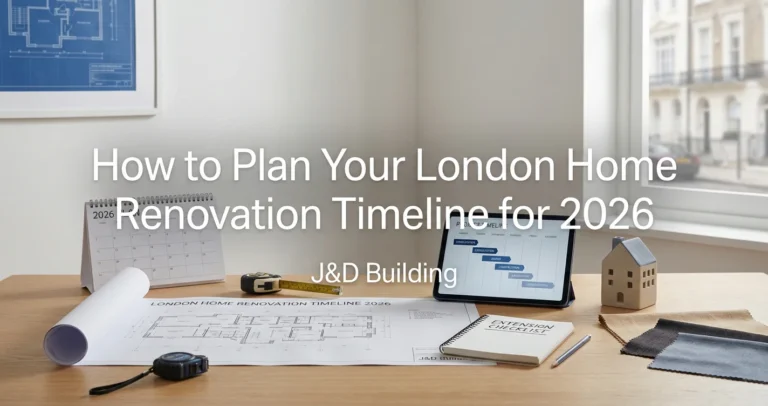
- To understand when these costs arise during the build, review How to Plan Your London Home Renovation Timeline for 2026 |.
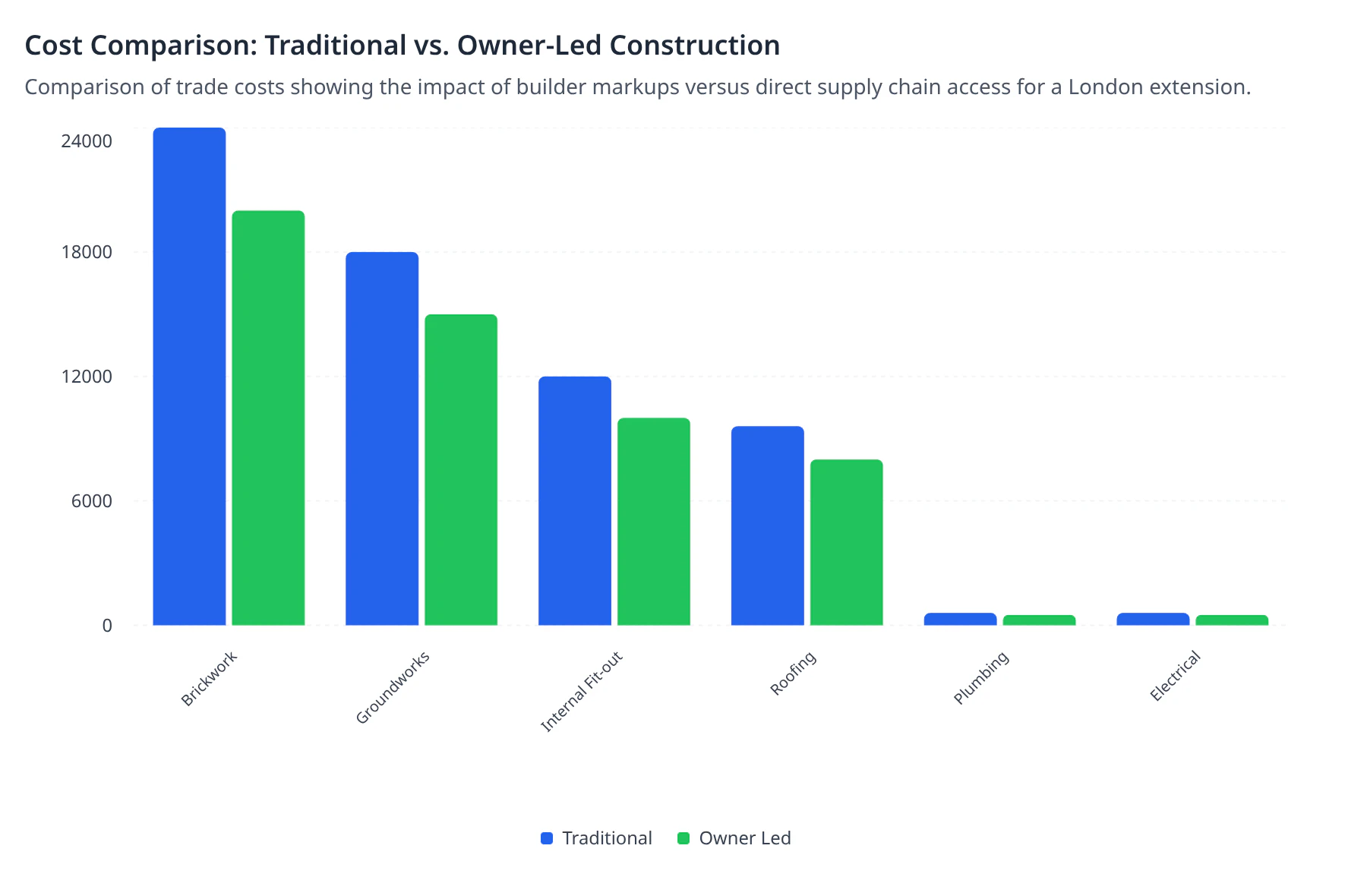
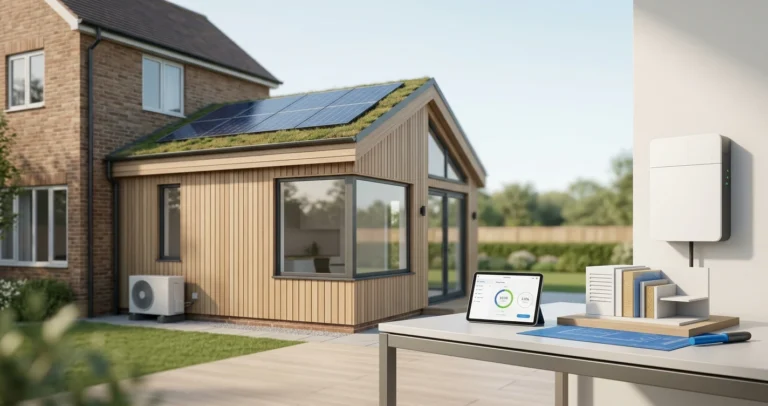
Comparison of trade costs showing the impact of builder markups versus direct supply chain access for a London extension.
5 Strategic Benefits of Owner-Led Project Management in 2026
Direct Supply Chain Access
In a traditional model, you might pay a markup on every sub-contractor’s invoice. If the plumber charges the builder £500, the builder charges you £600. In owner-led construction, you pay the plumber £500 directly. This transparency is crucial in 2026, where material inflation is already pressuring budgets.
Enhanced Quality Control
When you are the site manager, you sign off on milestones. You are not relying on a third party to tell you the insulation was installed correctly before the plasterboard went up—you saw it yourself. This level of scrutiny ensures that the “hidden” elements of a build meet your exacting standards.
Real-Time Budget Agility
Construction in 2026 requires rapid decision-making. If steel prices drop or timber spikes, an owner-led manager can pivot immediately—perhaps switching flooring specs to accommodate a structural cost increase—without waiting for a formal “Variation Order” and the administrative fees that accompany it.
Customisation and Flexibility
General contractors prefer predictability. They may discourage mid-project changes because it disrupts their schedule. As the owner-manager, you have the flexibility to change the kitchen layout or lighting plan on the fly, provided you accept the schedule impact.
Improved Accountability
Direct relationships with tradespeople foster better accountability. When the electrician knows they are paid directly by you, the homeowner, the relationship is personal. There is no middleman to blame for miscommunications.
The Realities: Risks and Rewards of Self-Managed Construction
Self-managing a construction project offers high financial rewards but introduces substantial legal and operational risks that most homeowners underestimate. With 30+ years of experience in this highly regulated industry, we have seen that projects fail not due to lack of funds, but due to a lack of site coordination and safety compliance.
- The Rewards:
- Financial Gain: Saving 15-25% of the project value.
- Skill Acquisition: Learning valuable project management skills.
- Pride: The immense satisfaction of having physically orchestrated the creation of your home.
- The Risks:
- Legal Liability: Under CDM 2015, you are responsible for site safety. If a worker is injured on your site, you could be liable. We strongly recommend reviewing the HM Government guidelines on sourcing and contracting to understand professional standards.
- Time Drain: It is a 20-hour-per-week part-time job.
- Technical Knowledge Gap: If you don’t know the difference between a purlin and a rafter, you may be taken advantage of by unscrupulous trades.
- Compliance Failures: Failing to organize building control inspections at the right time can force you to tear down completed work.

Essential Tech: Best Project Management Software for Owner-Led Construction
Effective owner-led construction in 2026 relies on cloud-based software to track real-time costs, schedules, and communication logs. We have found that relying on spreadsheets alone is a primary cause of budget overruns in self-managed projects.
- Top Recommendations:
- Buildertrend / CoConstruct: These are industry standards. While expensive for a single project, they offer robust scheduling, budget tracking, and document storage.
- Monday.com / Asana: Excellent for task management and Gantt charts. You can create dependencies (e.g., “Plasterer cannot start until First Fix Electric is complete”).
- Excel / Google Sheets: Sufficient for budget tracking if you are highly disciplined, but lacks the automated reminders of dedicated construction software.
Using these tools allows you to track expenses against London Extension Costs: A Complete 2026 Guide | average cost benchmarks, ensuring you spot overspending before it becomes critical.
The J&D ‘On-the-Ground’ Reality: Navigating South London’s 2026 Planning Maze
Navigating the planning landscape in boroughs like Croydon, Bromley, and Sutton requires specific local knowledge that generic advice often misses. In 2026, local councils are under immense pressure, leading to slower processing times for full planning applications. Our 30+ years of tenure operating specifically in these South London boroughs establish a deep understanding of local planning navigation.
The “Prior Approval” Trap Many owner-builders assume their project falls under Permitted Development (PD). However, for larger extensions (up to 6m for terraced/semi-detached, 8m for detached), you need “Prior Approval.” We have seen numerous self-managed projects in South London stalled because the owner didn’t realize their “PD” rights were restricted by an Article 4 direction.
The “Jozeph Factor” Even in an owner-led model, having an expert advisor is critical. We often consult for clients who want to manage the build but need help navigating the technicalities of Permitted Development vs Planning Permission: A London Homeowner’s Guide. Direct contact with owner Jozeph provides that level of personal accountability and expert verification needed for complex projects.
Material Shortages in the Home Counties Supply chains in Surrey and Kent are currently experiencing volatility with brick and timber availability. A General Contractor usually has priority accounts with merchants. As an owner-builder, you are at the back of the queue. This is a critical risk to factor into your timeline.
For a deeper understanding of safety requirements during these builds, the CNC Building Control guide provides an excellent checklist for loft conversions and fire safety compliance.
Owner-Led Construction: Your 2026 Questions Answered
What is the construction industry forecast for 2026?
The 2026 forecast predicts a stabilization of material prices but a continued rise in labour costs due to skilled trade shortages. This makes the owner-led model attractive for saving on management fees, though securing reliable tradespeople will be the primary challenge.
What is the role of the owner on a construction project?
In an owner-led project, the owner acts as the Client and often the Principal Contractor. This involves defining the scope, financing the project, hiring the supply chain, coordinating site logistics, and holding legal responsibility for health and safety under CDM regulations.
What are the 3 main factors aside from safety of most importance to a construction manager?
Beyond safety, a manager must balance Cost (budget adherence), Time (schedule management), and Quality (compliance with specifications). In 2026, Sustainability is rapidly becoming a fourth critical pillar, driven by new energy efficiency regulations.
What is the construction outlook for 2030?
Looking toward 2030, the industry is moving toward off-site manufacturing and modular construction. We expect owner-led projects to become easier as “plug-and-play” extension kits become more common, reducing the reliance on wet trades like plastering and bricklaying.
Do I need planning permission for a kitchen extension in South London?
Not always. Under Permitted Development rights, you can often extend up to 3m or 6m (with Prior Approval) without full planning permission, provided you meet height and material conditions. However, flats and maisonettes do not have PD rights.
How long does a typical dormer loft conversion take in 2026?
A standard dormer loft conversion takes between 8 to 12 weeks. An owner-led project often takes 2-4 weeks longer due to the learning curve in scheduling trades efficiently.
Is Owner-Led Right for You? Limitations and Professional Alternatives
Be honest with yourself: If you work 60 hours a week in the City, owner-led construction is likely to fail. The stress of answering calls from electricians at 7 AM and sourcing lost deliveries at 8 PM is not sustainable for everyone.
The Hybrid Model There is a middle ground. You can hire a transparent, family-run firm like J&D Building. With 30+ years of industry experience, we offer the structure and expertise of a main contractor but operate with the communication style of a partner. You get the “Owner-Led” feeling of control and visibility through direct contact with owner Jozeph, without the risk of being sued if a scaffolder drops a pole.
Taking Control of Your 2026 Development
Owner-led construction empowers homeowners to maximize their budget and retain control over their living space. However, it demands respect for the complexities of the trade. Whether you choose to manage the project yourself or partner with professionals, success in 2026 depends on early planning and realistic budgeting informed by our transparent 2026 cost data.
For expert support on your next project, explore Our Comprehensive Building Services London | J&D Building to see how we can help you build with confidence.