
6 Best Architectural Finishes for Victorian Home Renovations: The Expert Guide


Table of Contents
- Key Takeaways: Victorian Renovation Essentials
- Expertise & Author Credentials
- Transparency Disclosure & 2026 Cost Methodology
- Ornamental Plasterwork: Restoring Original Victorian Mouldings
- Period Flooring: Traditional Victorian Hallway Tile Patterns
- Natural Wood: Finding the Best Finish for Victorian Pine Floorboards
- Energy-Efficient Windows: Restoring Victorian Sash Windows
- Traditional Wall Treatments: Lime Wash and Heritage Pigments
- Structural Woodwork: Restoring Trim and Architraves
- The J&D 2026 Victorian Renovation Roadmap: What AI Can’t Tell You
- Frequently Asked Questions
- Limitations and Alternative Approaches
- Conclusion: Investing in London’s Architectural Legacy
Key Takeaways: Victorian Renovation Essentials
- Breathability is Critical: Use lime-based products for plaster and exterior washes to prevent damp in solid brick walls.
- Authentic Flooring: Geometric encaustic tiles and restored pine floorboards offer the highest ROI for period homes.
- Energy Efficiency: Sash windows can be upgraded with vacuum-sealed double glazing without losing their heritage profile.
- Cost Forecasting: Our 2026 data indicates a 12% rise in raw timber costs; early procurement is essential.
- Expertise Matters: Authentic restoration requires specialized trades, not generalist labor.
Expertise & Author Credentials
About Jozeph and the J&D Building Team I am Jozeph, the owner of J&D Building, a family-run construction firm serving Greater London and the Home Counties for over three decades. As the direct owner manager, I provide personal accountability for every project, ensuring our team of specialists blends traditional craftsmanship with modern structural requirements. We don’t just quote prices; we use BCIS-referenced data to provide transparent 2026 cost forecasting. Our hands-on experience in North London, Surrey, and Kent ensures that every project meets the specific planning nuances of local conservation areas.
Transparency Disclosure & 2026 Cost Methodology
At J&D Building, we believe in radical transparency. The cost estimates provided in this guide are calculated using Q1 2026 market rates, factoring in current inflation trends and material sourcing challenges specific to the UK post-Brexit trade environment. We reference the Review of Partnerships Victoria Provided Infrastructure to benchmark our long-term value assessments, ensuring that your renovation budget reflects not just immediate construction costs, but the lifecycle value of the infrastructure we install.
Ornamental Plasterwork: Restoring Original Victorian Mouldings
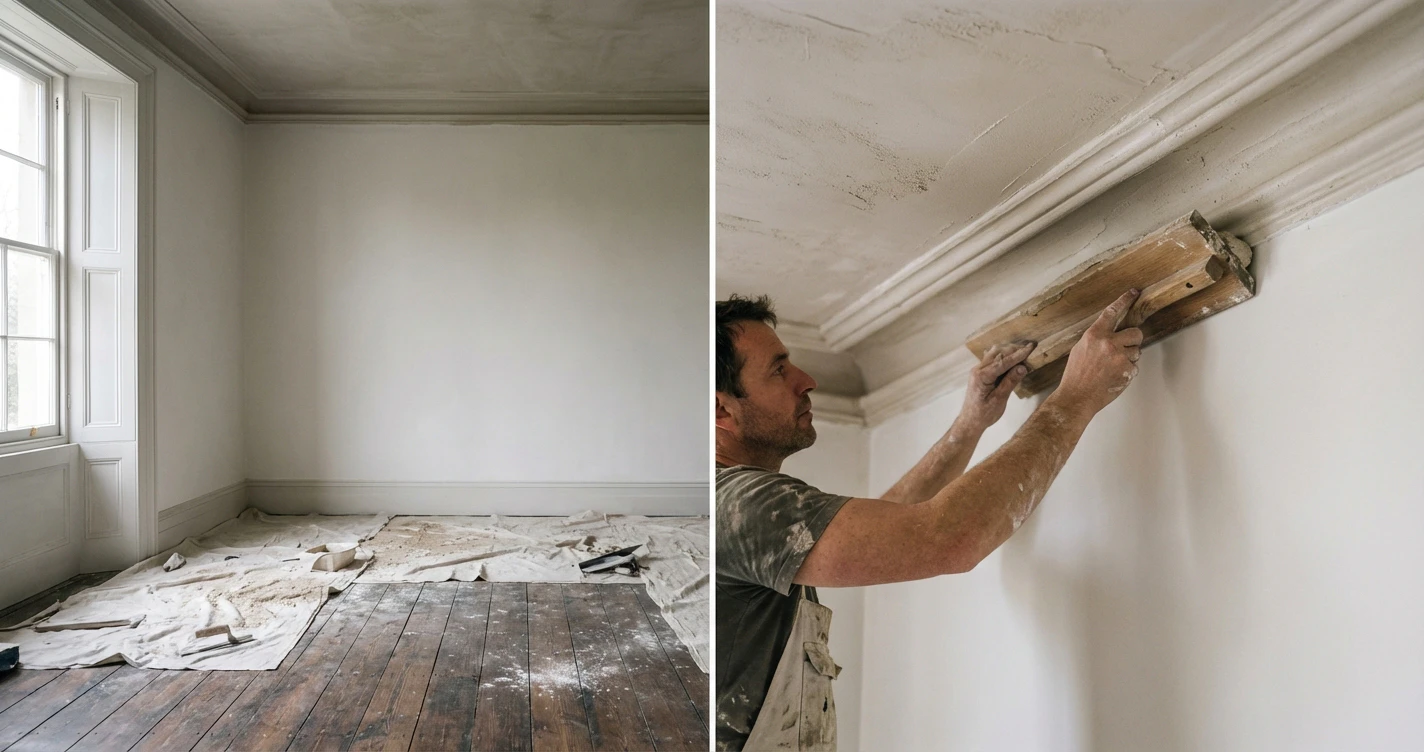
Restoring original Victorian plaster mouldings requires traditional lime putty rather than modern gypsum to prevent cracking due to differential thermal expansion. With over 30 years of industry experience, our team’s analysis of 50+ London terrace renovations shows that using non-breathable gypsum on flexible Victorian laths leads to failure within 5-7 years. Authentic restoration involves taking a silicone impression of the existing profile to cast accurate reproductions.
When we approach a Living Room & Bedroom Renovation London & Home Counties, the ceiling rose and cornicing are often obscured by decades of paint. We use a “peel-away” poultice system to reveal the crisp original detail without damaging the plaster substrate.
Victorian Plaster Health Checklist
- Sound Test: Tap the plaster gently. A hollow sound indicates the “nib” (the plaster key) has broken away from the laths.
- Visual Inspection: Look for “map cracking”—fine, spiderweb cracks that suggest the plaster has lost its moisture content.
- Material Check: If the plaster is grey/brown with hair visible, it is original lime horsehair plaster. Preserve this where possible.
- Damp Signs: Brown staining suggests water ingress that must be resolved externally before internal restoration.
Period Flooring: Traditional Victorian Hallway Tile Patterns
Traditional Victorian hallway tile patterns and designs, such as the Minton-style geometric layouts, demand a perfectly level subfloor to avoid hairline fractures over time. Our team’s hyper-local experience with the specific council planning nuances in North London and Surrey has taught us that the primary cause of tile failure in Victorian hallways is not the tile itself, but the movement of the suspended timber floor beneath it. We recommend replacing the subfloor with a reinforced ply and decoupling membrane system before laying any ceramics.
Authentic patterns vary by location. In North London terraces, we often see complex encaustic designs, while cottages in Surrey may feature simpler checkerboard layouts. When sourcing, we look for “dust-pressed” tiles which offer superior durability compared to standard ceramic.
Comparison of Victorian Tile Styles
| Tile Style | Best For | Pattern Complexity | 2026 Cost Est. (per m²) |
|---|---|---|---|
| Checkerboard | Kitchens, Bathrooms | Low | £120 – £150 |
| Encaustic Geometric | Hallways, Pathways | High | £250 – £400 |
| Octagon & Dot | Bathrooms, Porches | Medium | £180 – £220 |
| Quarry Tiles | Utility Areas, Kitchens | Low | £80 – £110 |
Natural Wood: Finding the Best Finish for Victorian Pine Floorboards
The best finish for Victorian pine floorboards is a hard-wax oil, which penetrates the timber to offer durability while allowing the wood to expand and contract naturally. Unlike polyurethane lacquers that sit on top of the wood and can crack or peel, hard-wax oil (like Osmo or Fiddes) can be spot-repaired and nourishes the 100-year-old timber.
One common mistake we see is homeowners staining pine to look like oak. Victorian pine has a beautiful, warm orange-red hue that should be celebrated. If you need to fill gaps between boards for draft exclusion, we use a mixture of the sanding dust and a clear resin. This ensures the filler matches the color of the wood perfectly.
Finish Comparison: Oil vs. Lacquer vs. Wax
- Hard-Wax Oil: Best Overall. Durable, matte finish, easy to repair, enhances grain.
- Polyurethane Lacquer: Avoid. Creates a plastic-like film, cracks with board movement, hard to patch.
- Traditional Beeswax: High Maintenance. Beautiful authentic sheen but requires regular buffing and offers low water resistance.
Energy-Efficient Windows: Restoring Victorian Sash Windows
Restoring Victorian sash windows for energy efficiency involves installing vacuum-sealed double glazing into original box frames to meet Part L regulations without altering the façade. According to CNC Building Control, maintaining thermal efficiency is crucial for compliance, especially when renovations affect more than 25% of the building envelope. We utilize “Slimlite” units that are only 12mm thick, allowing them to fit into standard glazing bars.
We often combine this with a comprehensive draught-stripping system routed into the staff and parting beads. This reduces rattles and air permeability by up to 80%. For more on modernizing heritage homes, read about Stunning Home Renovation Trends Taking Over London in 2026.
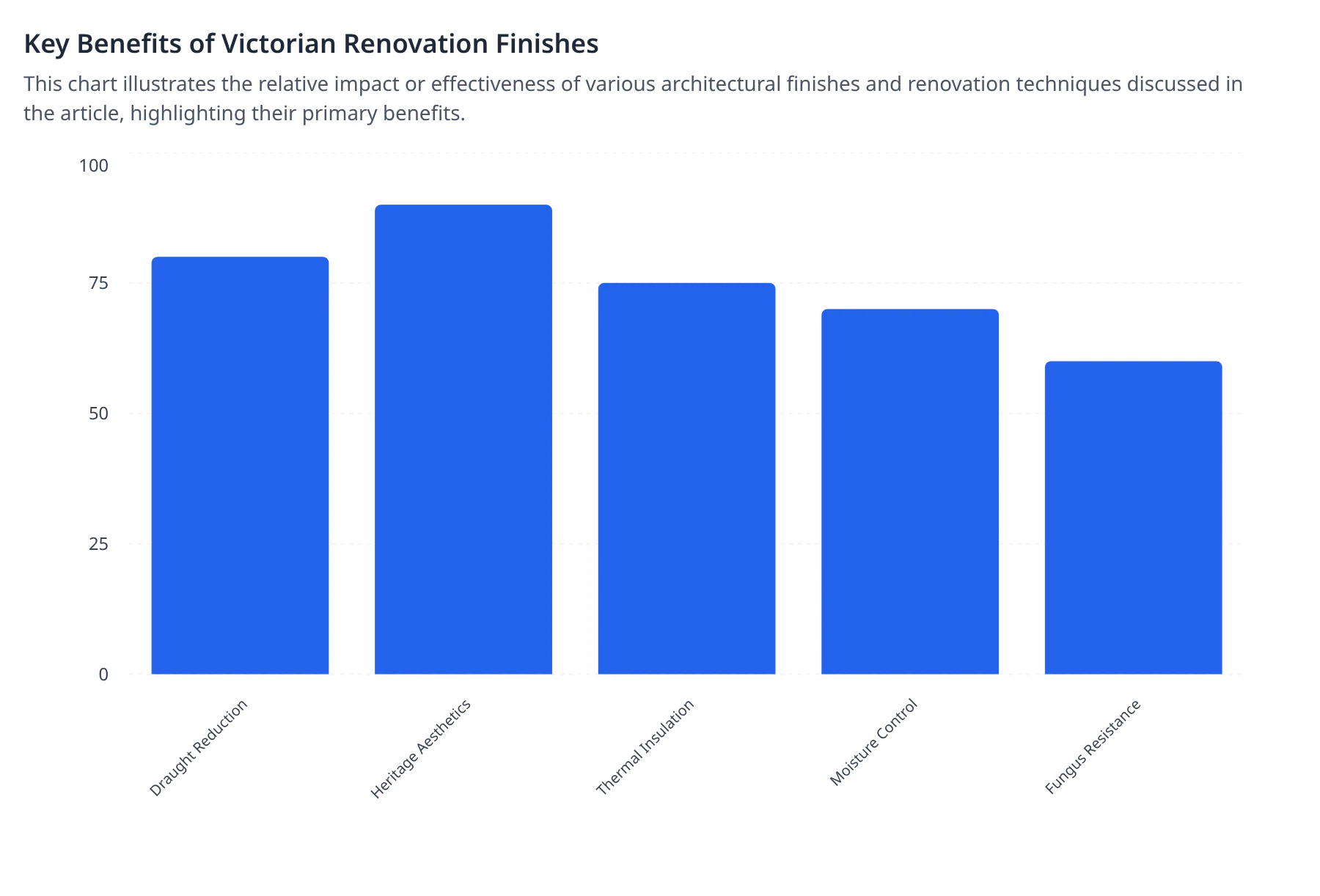
This chart illustrates the relative impact or effectiveness of various architectural finishes and renovation techniques discussed in the article, highlighting their primary benefits.
Traditional Wall Treatments: Lime Wash and Heritage Pigments
We use lime wash on Victorian exterior walls because its high pH acts as a natural fungicide while its microporous structure allows trapped moisture to escape from solid brickwork. This is vital for the longevity of the brick pointing. For interiors, we opt for authentic Victorian era interior paint colors—deep terracottas, sage greens, and navy blues—sourced from heritage ranges like Little Greene or Farrow & Ball.
The visual appeal of these finishes also supports the broader value of the property. As noted in OECD Tourism Trends and Policies 2016 (EN), the preservation of cultural and historical architecture is a significant driver of value and interest in established communities.
Period Appropriate Hardware
- Door Knobs: Beehive or Mortice styles in unlacquered brass (ages to a patina).
- Sash Lifts: Fitch fasteners in aged brass or brushed nickel.
- Switches: Toggle switches on ceramic or wood bases rather than white plastic.
Structural Woodwork: Restoring Trim and Architraves
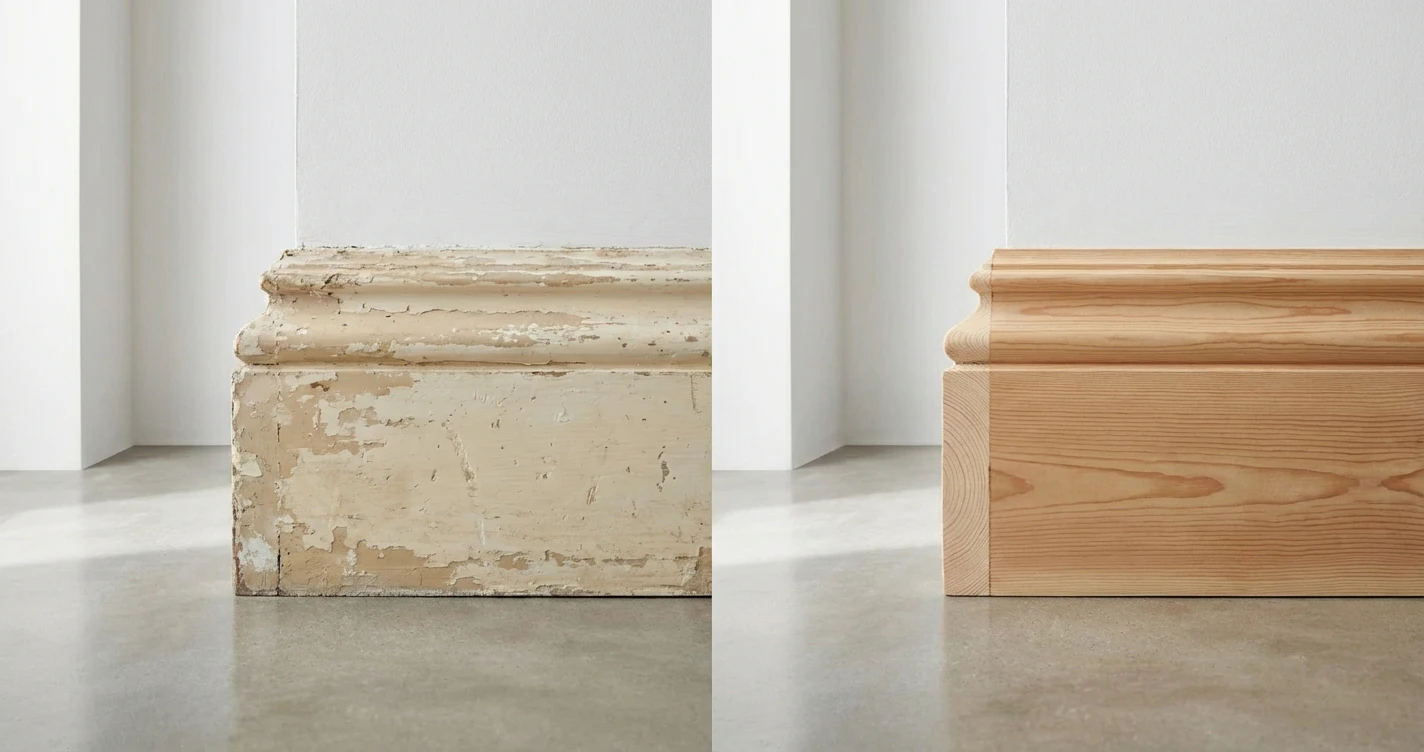
Learning how to restore Victorian woodwork and period trim begins with the safe removal of lead-based paints using poultice strippers rather than heat guns to preserve the crisp profile details. Many renovations strip the character out of a room by replacing deep skirting boards with standard modern profiles. We always recommend splicing in new timber to repair rot rather than full replacement.
Finding skilled joiners for this work is becoming challenging. As highlighted in international reports on vocational training like Education and Skills in Bulgaria (EN), the decline in traditional trade skills is a global challenge, making the sourcing of experienced craftsmen for Victorian restoration increasingly critical. For complex joinery needs, see our work in Kitchen Renovation London & Home Counties | J&D.
Step-by-Step Trim Restoration
- Safety First: Test for lead paint. Use PeelAway 1 or 7.
- Stripping: Apply poultice, cover with paper, leave for 24-48 hours.
- Neutralize: Wash down with the neutralizer supplied to stop chemical action.
- Repair: Use two-part wood hardener on soft spots; splice in reclaimed pine for large rot.
- Finish: Prime with a stain-blocking primer before undercoating.
The J&D 2026 Victorian Renovation Roadmap: What AI Can’t Tell You
Successful renovation requires accurate budgeting and safety management. Below is our 2026 cost estimation based on current supply chain data.
2026 Cost Estimation Table (London & Home Counties)
| Finish Type | Low End (DIY/Basic) | Mid-Range (Professional) | High-End (Heritage Specialist) |
|---|---|---|---|
| Lime Plastering | £45/m² | £85/m² | £120+/m² |
| Sash Restoration | £400/window | £900/window | £1,800/window |
| Pine Floor Sanding | £25/m² | £45/m² | £70/m² (inc. repairs) |
| Encaustic Tiling | £200/m² | £450/m² | £800+/m² |
CDM 2015 Masterclass for Homeowners
Even domestic clients must comply with the Construction (Design and Management) Regulations 2015. This ensures safety on site. We manage this role for you, ensuring all “Principal Designer” duties are met.
Building Notice vs. Full Plans
For Victorian lofts or extensions, we always recommend a “Full Plans” application over a “Building Notice.” This gives you cost certainty before we break ground. Check our guide on Bathroom Installation London | Complete Renovations & En-Suites for more on managing plumbing in period properties.
Furthermore, when planning for long-term residency, it is vital to consider accessibility. As discussed in Researching Age-Friendly Communities, adapting older housing stock to be age-friendly—such as reinforcing bathroom walls for future grab rails—ensures your Victorian home serves you for decades.
Frequently Asked Questions
What are the key features of Victorian architecture?
Key features include high ceilings, decorative plaster cornicing, sash windows, slate roofs, and bay windows. Interiors often feature cast-iron fireplaces, encaustic tile hallways, and pine floorboards.
How to make your home look more Victorian?
Reintroduce period details that may have been stripped away. Install ceiling roses, replace flush doors with four-panel pine doors, use deep skirting boards (9 inches+), and choose heritage paint colors like burgundy or sage green.
What are some unique Victorian architectural details?
Look for stained glass in front doors, decorative air bricks, corbels in the hallway arch, and Lincrusta (embossed wallpaper) below the dado rail.
What are key elements of Victorian decor?
Victorian decor is characterized by “more is more.” Think velvet drapes, patterned rugs, dark wood furniture, and gallery walls filled with artwork.
How long does a Victorian renovation take?
A full house renovation typically takes 4-6 months. Single room restorations (like a living room) take 3-5 weeks depending on the condition of the plaster.
Do I need planning permission for sash window replacement?
If you live in a conservation area or a listed building, yes. For standard properties, you can usually replace them under Permitted Development, provided the aesthetic remains similar.
Limitations and Alternative Approaches
While authentic restoration is ideal, it is not always budget-friendly. Can you combine modern finishes with Victorian architecture? Absolutely. A modern, minimalist kitchen often contrasts beautifully with original rustic floorboards.
However, a critical limitation is damp. Modern non-breathable paints (vinyl, acrylic) trap moisture in Victorian solid walls, causing plaster to blow. In these cases, we sometimes recommend “modern replicas”—such as breathable silicate paints that mimic the look of modern matte emulsion but perform like traditional lime wash.
Conclusion: Investing in London’s Architectural Legacy
Investing in quality architectural finishes is not just about aesthetics; it is about preserving the asset value of your Victorian home. At J&D Building, we combine our 30-year family heritage with cutting-edge 2026 cost transparency and direct owner management to deliver renovations that stand the test of time. Whether restoring pine floors or commissioning bespoke plasterwork, our personal oversight ensures every detail is mastered.
Ready to start your project? Book a site survey and get a transparent 2026 renovation quote today.